




| Quantity: | |
|---|---|


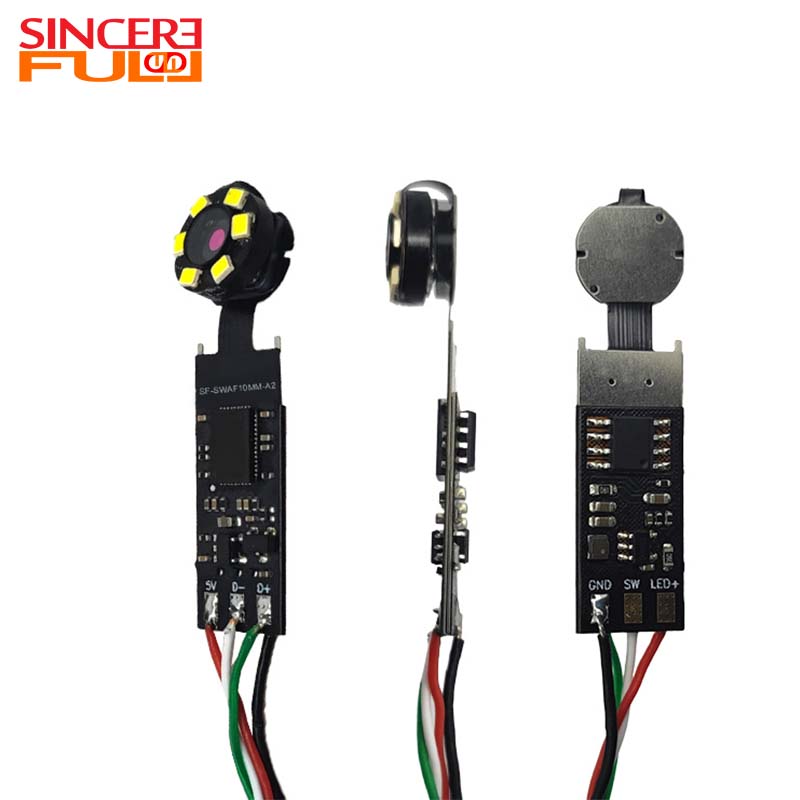
SF-SWAF10MM-A2
SINCEREFIRST
| The 5MP Image Sensor USB 2.0 Autofocus Endoscope Camera Module with Ø10 mm Head and 6 LEDs for Compact Inspection Devices designed for visual inspection, close-range observation, and space-constrained device integration. It features a Ø10 mm camera head, 73° field of view, and 6 integrated white LEDs, making it suitable for projects that require a small imaging front end with active illumination. The module supports YUV and MJPG image formats and multiple resolutions including 640×480, 1280×720, 1920×1080, and 2592×1944. Its Autofocus capability makes it particularly useful for applications where the target distance may change during operation. Frame rates and the image sensor model are not specified in the current product drawing and should be confirmed before final project selection. This model is positioned for OEM projects that need a combination of: compact camera structure, adjustable focus, close-range LED illumination, and practical USB image acquisition. |  |
1. 5MP Resolution for Detailed Visual Observation: The 5MP imaging capability provides higher image detail for component observation, assembly checking, text capture, and other close-range inspection tasks. It is suitable for projects where a basic low-resolution camera does not provide enough visual detail.
2. Autofocus for Variable Working Distances: The AF design is useful when the target-to-camera distance changes during normal operation.Compared with a Fixed Focus module designed around one defined working distance, this model is better suited to handheld inspection tools and observation systems that need more flexible focusing behavior.
3. Compact Ø10 mm Camera Head: The circular Ø10 mm front-end structure helps simplify integration into compact devices, narrow installation openings, and space-limited mechanical designs. This is an important advantage for equipment where a conventional rectangular camera PCB is difficult to install near the observation point.
4. Six White LEDs for Close-Range Illumination: Six white LEDs are integrated around the imaging area to support observation in darker device interiors and other close-range inspection conditions. LED brightness, color temperature, and control requirements should be evaluated according to the final application.
5. USB 2.0 with YUV and MJPG Image Formats: The module uses a USB 2.0 interface and supports YUV and MJPG formats. This makes it suitable for practical image acquisition applications using PC-based or embedded host systems. Host operating system compatibility, UVC support, and driver requirements should be confirmed according to the target platform.
6. 73° FOV for Balanced Observation Coverage: The 73° field of view provides a practical balance between scene coverage and target detail. It can be considered for compact inspection devices where the customer needs more coverage than a narrow-angle lens but does not require an ultra-wide-angle view.
Product Name | 5MP Side View Endoscope Camera Module |
Pixel | 5MP |
Working Current | 140mA-150mA |
Output Interface | USB2.0 |
| Fcous Mode | Auto Focus |
Image Sensor | CMOS |
Features | Mini Endoscope Camera |
| Format | YUV/MJPG |
Lens | FOV 73° 4P+RI |
Diameter | 10mm |
Led | 6PCS |
Warranty | 10 Years |
1. Equipment Internal Maintenance: Can inspect lateral defects and rust on engine blocks, valve bodies and mold sidewalls without disassembly via its professional side-view imaging capability.
2. Beauty Skin Detection: Can serve as a built-in imaging unit for skin and pore analyzers to capture microscopic skin texture details accurately.
3. Pipeline Cavity Inspection: Can visually check lateral blockages, cracks and corrosion inside pipelines with inner diameter above 10mm relying on its standard side-view probe.
4. Portable Maintenance Devices: Can act as a standardized embedded visual module for handheld automobile and household appliance maintenance equipment to realize all-round lateral detection.
Lens and FOV requirements can be reviewed according to the target size, working distance, and observation area.
The required minimum and maximum working distances should be provided so that the suitability of the standard AF configuration can be evaluated.
Illumination requirements can be discussed based on the target environment, observation distance, and final device structure.
The current drawing defines a six-pin electrical interface, while the connector model is not specified. Cable and connector adaptation can be reviewed according to the customer's main board and mechanical structure.
The Ø10 mm camera head and complete module dimensions should be reviewed together with the customer's opening size, installation depth, and Shell design.
Compatibility with a target Windows, Linux, Android, or embedded host system should be evaluated according to the final platform, video format requirement, and software environment.
1: Is the SF-SWAF10MM-A2 suitable for PC-based visual inspection systems?
It can be evaluated for PC-based inspection and observation systems because the module uses USB 2.0 and supports YUV and MJPG image formats. However, UVC support, driver requirements, and operating system compatibility are not specified in the current catalog. These points should be confirmed according to the target host platform.
2: Why would I choose this Autofocus model instead of a Fixed Focus camera module?
The AF design is more suitable when the target distance changes during use. This can be useful for handheld inspection equipment, maintenance tools, and observation systems where the operator may move the camera closer to or farther from the target.
A Fixed Focus model may be more suitable when the working distance is stable and clearly defined.
3: What is the advantage of the Ø10 mm camera head?
The Ø10 mm front-end structure is designed for compact mechanical integration. It is useful when the customer has a limited front opening or a narrow installation area near the observation point.
The complete installation depth and mechanical clearance should still be checked against the final device drawing.
4: What is the function of the six LEDs on this camera module?
The six integrated white LEDs provide close-range illumination for darker environments such as equipment interiors, maintenance inspection points, and enclosed observation areas.
The required brightness, color temperature, LED control method, and working distance should be evaluated according to the final application.
5: Can this module be used for barcode or QR code reading?
It can be evaluated for static or low-speed barcode and QR code reading applications because the module provides 5MP imaging and Autofocus.
For moving conveyor applications or high-speed scanning, the required frame rate, exposure conditions, shutter type, working distance, and decoding algorithm should be confirmed before selection.
6: Can the lens or FOV be adjusted for my project?
Lens and FOV requirements can be reviewed according to the target size, working distance, required observation area, and installation space.
The standard drawing specifies a 73° FOV. Other optical requirements should be discussed based on the actual application.
7: Is this model waterproof or suitable for wet inspection environments?
The current product drawing does not specify IP67 or another waterproof rating. Therefore, the standard module should not be described as waterproof based on the available information.
Environmental protection requirements should be reviewed according to the final Shell, sealing structure, cable design, and application conditions.
8: What information should I provide to confirm whether SF-SWAF10MM-A2 fits my project?
Please provide the target device type, host platform, minimum and maximum working distance, required FOV, target object size, installation opening, available installation depth, cable length, lighting environment, and expected application.
This information helps evaluate whether the standard SF-SWAF10MM-A2 is suitable or whether the lens, cable, connector, illumination, or mechanical structure should be reviewed for a customized version.


