Views: 0 Author: Site Editor Publish Time: 2026-07-12 Origin: Site


Inspecting confined mechanical environments presents a demanding technical hurdle. We must balance exceptional optical clarity with extreme physical constraints. Complex environments like turbine blades, deep pipe networks, and engine cylinders require highly specialized visual components. Standard imaging sensors simply fail in these dark, hostile spaces. You need an endoscope camera module capable of navigating tight radii while delivering precise visual data. This precision remains vital for non-destructive testing (NDT) integration across aerospace, automotive, and industrial manufacturing sectors.
Failing to match your camera module specifications to the physical environment risks missing critical structural flaws. Inadequate lighting or poor focal depth hides micro-fractures in metallic surfaces. This guide will help engineering, QA, and procurement teams evaluate and select the right endoscope camera module. We will explore key evaluation criteria, integration requirements, and severe environmental limitations. You will learn how to shortlist a module that guarantees inspection reliability without compromising your broader system architecture.
Size vs. Sensor Trade-offs: Sub-3mm modules sacrifice native resolution; success depends on precise Depth of Field (DoF) and Image Signal Processor (ISP) tuning.
Environmental Durability: An IP67 rating is the baseline for fluid resistance, but thermal management within the module is equally critical in confined spaces.
Integration Viability: Choosing between USB, MIPI, or customized outputs dictates the engineering overhead required for deployment into your inspection systems.
Narrow spaces completely lack ambient light. You must deploy industrial endoscope camera module hardware featuring integrated, heat-managed LED arrays. Ring lights serve as a common and effective solution. They illuminate highly reflective metallic surfaces within engine cylinders or pipelines. However, you must carefully control the optical output intensity. Unregulated light causes severe sensor wash-out on shiny internal pipe walls. Advanced ISP tuning helps mitigate this glare. It adjusts exposure levels dynamically as the camera module moves past reflective anomalies.
Operating inside enclosed engine blocks introduces high ambient temperatures. Active fluid pipelines also generate intense environmental heat. Endoscope camera modules face serious thermal realities in these applications. They must handle thermal noise effectively without degrading image fidelity. Image sensors generate their own internal heat during operation. When deployed inside a tight steel cavity, this heat cannot escape easily. Excessive temperature elevates dark current noise within the sensor pixels. Engineers must prioritize thermal dissipation materials during the initial module integration design.
Mechanical friction poses a constant threat during industrial inspections. When integrated into inspection systems, operators repeatedly insert and extract the custom assemblies through abrasive openings. Standard materials degrade rapidly under this repetitive stress. Carbon deposits inside engines act like sandpaper against the module's lens cover. You need heavily reinforced cabling to withstand this abuse. These camera modules also require scratch-resistant sapphire or hardened glass lens covers. These protective layers prevent optical degradation over time. A scratched lens ruins light transmission and renders the inspection data useless.
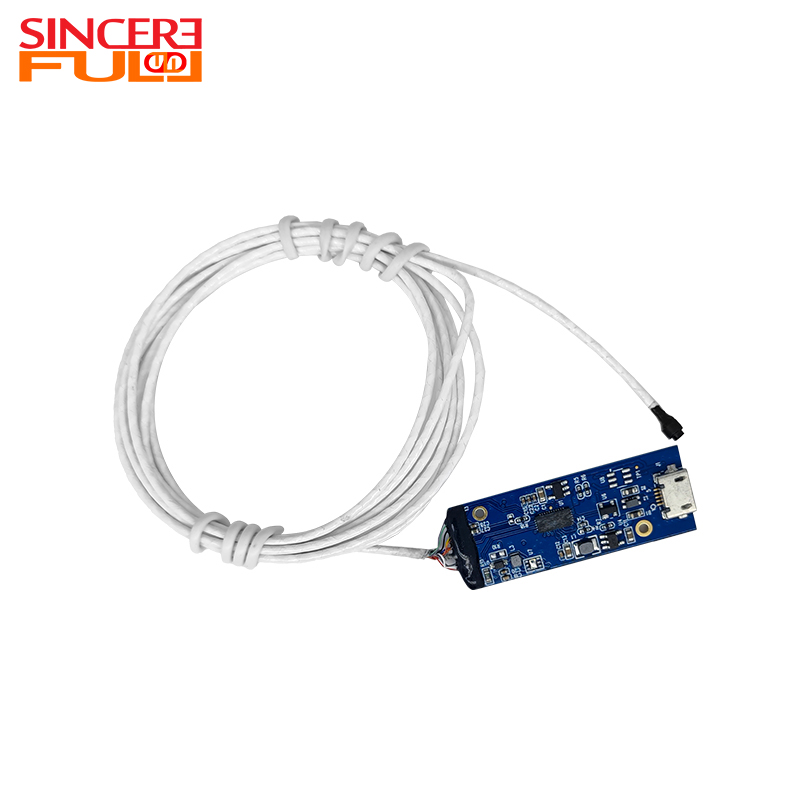
Sub-3mm modules, such as 2.8mm variants, remain essential for micro-cavities. They fit easily where standard inspection components cannot pass. However, they demand aggressive image correction. The smaller 1/9-inch sensor sacrifices native resolution to achieve the tiny footprint. Software must reconstruct edge details and reduce visual noise actively.
If the cavity diameter permits, 4mm to 6mm modules provide significantly better sensor sizes. They utilize 1/6-inch or 1/4-inch sensors. These typically range from 1MP to 4MP. This yields vastly superior image clarity and color reproduction. You should always select a narrow-space endoscope module offering the largest possible diameter for your specific target enclosure. Maximize the physical sensor size before relying on software enhancement.
Module Size Category | Typical Resolution Range | Processing Requirement | Optimal Integration Target |
|---|---|---|---|
Sub-3mm (e.g., 2.8mm) | Below 1MP (often 400x400) | Aggressive noise reduction needed | Aviation micro-cavities, tight valves |
4mm – 6mm | 1MP to 4MP | Standard ISP tuning | Automotive engine blocks, pipe networks |
8mm and above | 4MP to 8MP+ | Minimal software correction | Large HVAC ducts, main sewer lines |
Evaluate the Field of View (FOV) based strictly on your module's target working distance. A 90° to 120° FOV represents the industry standard for general industrial module integration. Extremely wide angles capture more area but introduce severe barrel distortion. Edge-distortion correction remains absolutely mandatory here. You cannot perform accurate structural assessments using bent or warped images. Software must flatten the image geometrically.
Choose between fixed focus and auto-focus carefully. Fixed focus lenses operate within a specific macro range, typically 10mm to 50mm. They offer incredibly high reliability for component-level integration. They contain no moving mechanical parts. This durability matters greatly in harsh environments. Auto-focus mechanisms rely on tiny voice coil motors. These motors frequently fail when exposed to extreme industrial vibrations.
Never accept basic environmental claims without demanding verification. When evaluating an IP67 endoscope camera, look deeper into the module's manufacturing process. Assess the specific potting compound used by the manufacturer. Examine the lens sealing methods under magnification. The camera module must withstand more than just clean water. It must resist industrial solvents, aggressive machine oil, and continuous liquid immersion during long operational shifts.
Engineers must carefully match the module's output interface to the final hardware application. USB 2.0 and USB 3.0 interfaces work beautifully for rapid prototyping. They ensure immediate off-the-shelf software compatibility. These UVC-compliant systems plug directly into standard industrial computers or proprietary control units. They require zero custom driver development.
Conversely, MIPI CSI-2 interfaces suit highly embedded systems. They utilize a multi-lane architecture to deliver low-latency video. They push high-bandwidth data directly into proprietary application processors. However, deploying a MIPI-based OEM industrial inspection module demands extensive software engineering. Your team must write custom Linux drivers and handle raw sensor demosaicing.
Assess cable shielding thoroughly before finalizing a module design. Electromagnetic interference (EMI) disrupts delicate digital video signals easily. This disruption frequently occurs near high-voltage industrial machinery or active power lines. Shielded twisted pair (STP) cables help mitigate this interference. Discuss maximum cable length limitations with your module vendor openly. Long cables degrade digital signals quickly due to inherent resistance. You may need specialized active repeaters or alternative analog transmission methods for integrating modules intended for deep-pipe routing.
Evaluate vendors based on their overall engineering flexibility. Standard off-the-shelf modules rarely meet complex non-destructive testing requirements perfectly. A capable vendor follows specific customization steps to ensure system harmony:
Modifying the rigid PCB footprints to fit inside proprietary custom probe housings.
Adjusting fixed focal lengths on the module to match your exact structural inspection distance.
Tailoring the LED array color temperatures to highlight specific metallic or composite defects.
Implementing custom software filters to suppress glare from highly reflective targets.
Enclosed module housings trap heat with remarkable efficiency. The camera's own illumination LEDs generate continuous thermal output. This trapped heat leads directly to fixed-pattern noise on the image sensor. Image grain increases rapidly as temperature rises. Prolonged inspections often trigger catastrophic sensor failure. A truly reliable rugged industrial endoscope camera utilizes advanced thermal management substrates within the module design. Metal outer shells act as heat sinks to draw energy away from the silicon.
When integrating these modules into steerable designs, the custom probe housings rely on internal mechanical tension wires to bend the tip. These tension wires represent the single most common point of mechanical failure. As operators bend the integrated tip hundreds of times per day, this action stresses the braided metal wires. Eventually, the tungsten or stainless steel strands snap. Always evaluate the stated bend radius limits carefully during the module enclosure design. Request comprehensive cycle-life testing data from the manufacturer before deploying articulation features in the field.
Common Mistake: Assuming a standard IP67 rating covers the camera module against all industrial liquids equally.
Best Practice: Request precise chemical compatibility charts covering the specific fluids present in your operational facility.
Standard ingress ratings only test the module for clean water and ambient dust. They completely ignore aggressive hydraulic fluids, aviation fuels, or corrosive cleaning chemicals. Substandard module lens adhesives dissolve quickly upon contact with strong industrial solvents. Once the adhesive fails, fluid floods the sensor cavity instantly. Always demand specialized industrial-grade potting materials designed for chemical resistance at the module level.
Never procure camera modules at scale without conducting a rigorous field test. Laboratory conditions do not replicate real-world scenarios accurately. Test benches lack the unpredictable reflections and thermal spikes found in actual machinery. Request functional sample modules from your shortlisted vendors. Mount them into your existing insertion housings. Test them under the exact thermal, chemical, and lighting conditions of your operational facility.
Favor manufacturing partners demonstrating complete technical transparency regarding their camera modules. Ask them to provide uncompressed raw image samples from the sensor. Request detailed ISP tuning documentation showing how they handle color correction and noise reduction. A trustworthy vendor will also share clear Mean Time Between Failures (MTBF) data based on empirical testing. This transparency indicates mature, repeatable engineering processes rather than improvised assembly.
Ensure your chosen module vendor holds all relevant industrial certifications. Look for strict CE, RoHS, and ISO 9001 compliance as a baseline. Furthermore, secure firm guarantees regarding long-term module component availability. Image sensors undergo rapid lifecycle changes. Discontinued sensors force expensive, time-consuming system redesigns down the line. Protect your project lifecycle by partnering directly with stable, vertically integrated supply chains.
Successful module procurement hinges entirely on matching optical capabilities directly to your physical realities. Narrow spaces enforce strict environmental rules. You must balance image resolution, thermal management, and severe chemical resistance simultaneously when integrating an endoscope camera module.
Prioritize exact focal lengths and distortion-free FOV over raw megapixel counts on the sensor.
Demand industrial-grade chemical sealing on the module, moving beyond basic water resistance.
Verify module cable shielding performance against EMI in high-voltage environments.
Perform rigorous field tests of the integrated module under actual operating temperatures and friction levels.
Initiate a technical consultation with an engineering-led endoscope camera module provider today. Map out your custom signal processing and physical housing requirements early in the design phase. This proactive approach ensures you integrate a robust, reliable vision module perfectly tailored to your industrial system.
A: Manufacturers offer micro-modules ranging from 1mm to 3mm in diameter. These incredibly small units are designed to be integrated into probes that navigate the tightest micro-cavities. However, they face strict physical limits regarding sensor size. Native resolution typically falls below 1MP. They rely heavily on aggressive software processing to deliver usable visual data.
A: Standard IP67 ratings for camera modules only certify protection against dust and clean water immersion. They do not guarantee resistance to aggressive chemicals. Hydraulic oils, aviation fuels, and corrosive solvents dissolve standard lens adhesives rapidly. You must request specialized industrial-grade potting compounds designed specifically for hazardous environments to protect the module.
A: Yes, highly reputable B2B manufacturers provide extensive optical customization for their camera modules. They adjust fixed focal lengths to match your exact integration and inspection distance. This ensures maximum sharpness whether you inspect a target 10mm away or 50mm away. Specify your required working distance during your initial engineering consultation.
A: Standard USB 2.0 and 3.0 interfaces experience severe signal degradation beyond 2 to 3 meters. For deeper industrial routing, you must integrate active repeater cables. Analog module setups or specialized IP-based transmission methods handle much longer distances without sacrificing video fidelity during deep pipe integration.


