




| Quantity: | |
|---|---|


SF-C10TV-D3.9
SINCEREFIRST
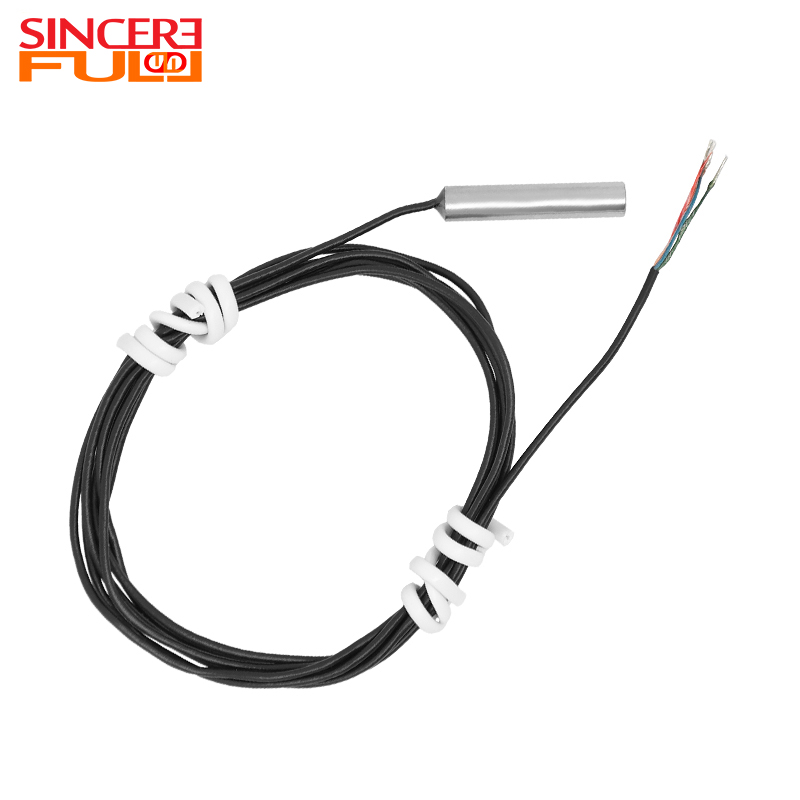
This 3.9mm Diameter OV6922 0.08MP CMOS Sensor NTSC Analog TV Output Wide Angle Endoscope Camera Module is a professional miniature analog imaging component tailored for minimally invasive close-range observation of narrow internal cavities. Built with an ultra-compact 3.9mm×20mm probe reinforced with a steel sheath and IP67 waterproof performance, it achieves excellent penetration for ultra-fine and tortuous cavity passages to meet precise invasive observation demands. Equipped with a 1/18-inch OV6922 sensor, it supports 328×248 effective pixels and 200TV Lines resolution to deliver clear and delicate analog imaging. The 98° wide-angle optical design expands single-frame viewing coverage, while factory-calibrated 10–60mm focusing range with a 20mm benchmark optimizes clarity for routine observation distances without manual on-site adjustment. Four integrated high-brightness white LEDs enable reliable imaging even in 0-lux completely dark environments, solving the lighting limitations of enclosed cavity detection. Adopting standard NTSC analog signal output, it connects directly to medical monitors and endoscope hosts with strong compatibility with traditional analog display devices. Supporting 3–5V wide-voltage power supply and 0.1–0.4W low power consumption, the module maintains stable long-term operation for clinical observation and fine cavity inspection scenarios. |
|
3.9mm Ultra-Miniature Probe: IP67 waterproof steel-sheathed structure maximizes accessibility for ultra-fine cavities and airway invasive observation.
0-Lux Full Dark Imaging: Built-in four high-brightness white LEDs support stable imaging in completely dark enclosed environments without auxiliary light sources.
Standard NTSC Analog Output: Directly outputs TV analog signals for seamless connection with traditional medical monitors and endoscope hosts.
Optimized Close-Range Focus: Pre-calibrated 10–60mm focal range with 20mm benchmark ensures consistent sharpness for routine clinical observation.
Product Name | 3.9mm Endoscope Camera Module |
Sensor | OV6922 |
Pixel | 0.08MP |
LED | 0402 LED |
Focusing Rang | 10~60mm |
Image Device | 1/18" |
Operating temperature | 0°C ~ 40°C |
FOV(D) | 98° |
Operating humidity | 30%-40%RH |
AGC | On |
| Effective Picture Element | 328(H)X248(V)/328 |
| TV System | NTSC |
| Waterproof | IP67 |
Airway Intubation Visualization: Can assist positioning for tracheoscopy and intubation operations to improve the accuracy and safety of airway intubation procedures.
Minimally Invasive Cavity Observation: Can capture real-time internal structural and lesion images for otolaryngology and urinary minimally invasive cavity examinations.
Ultra-Fine Pipeline Inspection: Can detect internal conditions of ultra-fine pipelines and medical consumable channels relying on its ultra-slim passable probe.
Medical Teaching & Training: Can serve as a standardized imaging unit for clinical teaching and skill training equipment to provide intuitive visual demonstration.
1. What is a endoscope camera module?
The endoscope camera module is an essential part of endoscopic equipment, enabling the capture of high-quality images or videos of internal body structures. It usually consists of an image sensor, optical lens, light source, connection interface, and a protective casing. This module plays a vital role in assisting healthcare providers to examine and diagnose the condition of internal organs or cavities during medical procedures. It offers live visual feedback, supporting surgical decisions and interventions with accurate, real-time imagery.
2. What is the difference between medical and industrial endoscope modules?
The medical module emphasizes biocompatibility, sterilization and high image quality, and needs to comply with FDA/CE certification; Industrial modules focus on durability, wide temperature operation and special light sources.
3. Why do Otolaryngology departments need ultra-small diameter modules?
With a narrow ear/nasal canal space, a module with a diameter of less than 3mm can reduce patient discomfort while maintaining a high resolution to identify small lesions.
4. Why do pipeline inspection modules need long cables?
The cable length is usually 10-30 meters, including Kevlar tensile layer and waterproof connector, which supports real-time transmission while resisting internal friction and chemical corrosion of the pipeline.


