Views: 0 Author: Site Editor Publish Time: 2026-05-19 Origin: Site


Securing reliable visual data in restrictive, harsh environments requires a strict design balance. You must carefully weigh module size against signal stability and environmental sealing. Failure to align these critical factors often compromises daily field operations. Digital interfaces currently dominate the consumer technology landscape. However, industrial machines and legacy medical equipment operate under entirely different technical constraints. They frequently demand the zero-latency, highly compatible nature of an analog video signal. Engineers must package this capability inside a rugged, micro-diameter housing to access confined spaces effectively.
This guide evaluates the technical realities of deploying specialized hardware in the field. We explore specific integration constraints and pinpoint optimal enterprise use cases. You will learn how to properly specify and implement a resilient analog module. Read on to ensure your next inspection tool meets strict operational demands without creating unnecessary engineering debt.
Analog Advantage: Analog output provides uncompressed, zero-latency video feeds essential for real-time procedural tools and legacy monitor integration.
Form Factor Precision: A 4.6mm diameter camera hits the sweet spot for narrow industrial pipe inspections and specific minimally invasive medical applications.
IP67 Reality Check: IP67 ensures protection against dust and temporary water immersion (up to 1 meter for 30 minutes), but requires specific housing materials (like stainless steel) for chemical or continuous exposure resistance.
Integration Predictability: Prototyping with standard AV outputs reduces software overhead but requires careful attention to signal interference and power management.
Digital video standards rule modern consumer electronics. Yet, industrial engineers frequently choose an analog endoscope for specialized diagnostic tasks. We must look past consumer trends to understand the engineering advantages of raw analog video feeds.
Raw CVBS or AV output delivers uncompressed, zero-latency video transmission. USB or MIPI digital encoding inherently introduces processing delays. The system must compress the data, transmit it, and decode it on the receiving end. A visual lag of even 50 milliseconds causes severe problems during real-time procedures. For example, a technician manipulating a retrieval tool inside an engine cylinder needs instantaneous visual feedback. An analog signal feeds directly to the display monitor without software bottlenecks. This instantaneous feedback ensures precise, safe physical control over the insertion probe.
Many critical industries rely on older, proven infrastructure. Upgrading entire medical towers or factory floor monitors requires massive operational downtime. Analog modules offer direct plug-and-play capability. You can connect them directly to existing CRT or LCD monitors. They interface perfectly with older AV-in displays. Developers bypass complex driver development entirely. You do not need to write new software to make the camera function. This broad compatibility keeps hardware design straightforward and highly predictable.
Extended cable runs present another major engineering challenge. Industrial pipeline inspections often require insertion cables stretching 20 to 30 meters. High-speed digital signals suffer rapid degradation over these long distances. They usually require bulky, active repeaters built into the cable to maintain data integrity. These repeaters increase the cable diameter and reduce flexibility. Analog signals behave much better over long copper wire runs. A standard 75-ohm coaxial design prevents excessive signal drop-offs. Engineers can deploy an analog endoscope deep into infrastructure without losing the video feed.
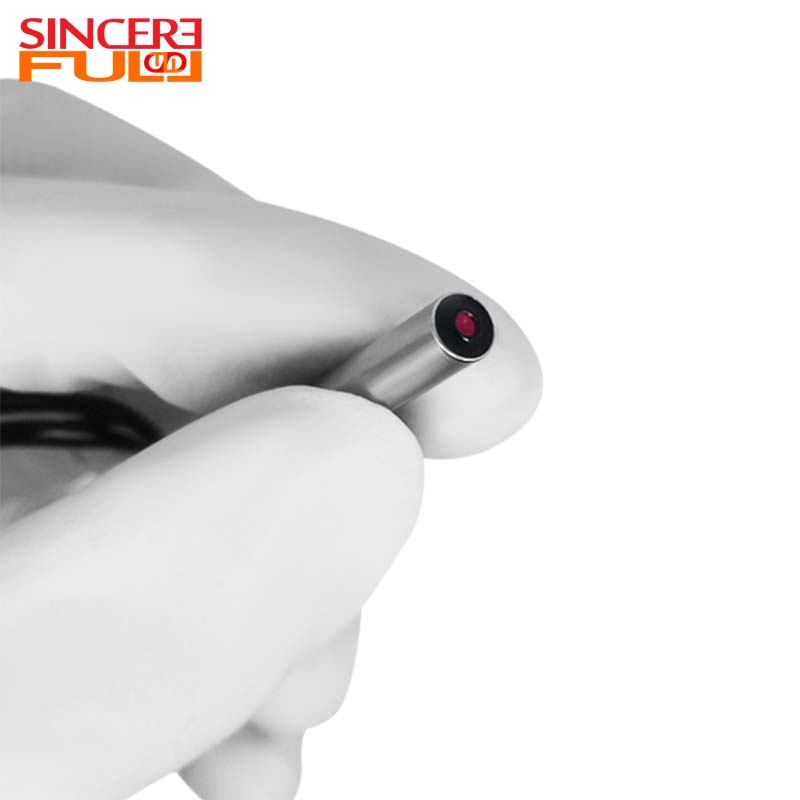
Designing equipment for confined spaces demands strict dimensional control. Every fraction of a millimeter impacts the tool's maneuverability.
Narrow passages demand micro-scale equipment. A 4.6mm diameter camera navigates tight industrial pipes effortlessly. It easily fits inside automotive engine valves, which often feature clearances of just 5mm to 7mm. Aerospace technicians utilize this size to inspect complex turbine blades without dismantling the engine. Medical engineers also adapt this specific form factor for certain gastrointestinal or ENT pathways. This precise dimension perfectly balances internal component space against external insertion mobility.
The 4.6mm footprint heavily dictates your available lens curvature options. Designers usually select between 65-degree and 90-degree FOV lenses for this micro-format. Wider angles capture more peripheral area inside a pipe. However, they introduce noticeable edge distortion, often called the fisheye effect. A narrower FOV maintains realistic spatial proportions but requires more physical camera movement. You must carefully match the lens angle to your primary inspection distance.
Lens Angle (FOV) | Distortion Level | Typical Application | Depth of Field Focus |
|---|---|---|---|
65 Degrees | Low | Precision welding inspection, Medical targeted viewing | 10mm - 50mm |
90 Degrees | Moderate | General pipe inspection, Automotive cylinder walls | 20mm - 80mm |
120 Degrees | High (Fisheye) | Large cavity overview, HVAC ducting | 30mm - Infinity |
Dark cavities completely lack ambient lighting. You must integrate active illumination directly into the probe tip. Fitting an image sensor and a micro-LED ring within a 4.6mm diameter requires extreme precision. This dense component packing creates immediate thermal management challenges. Surface-mounted LEDs generate localized heat during continuous operation. You must dissipate this thermal energy safely through the housing. If heat builds up, sensor thermal noise increases rapidly. This noise manifests as colored static, ultimately destroying image clarity.
Harsh environments destroy unprotected electronics in minutes. Proper environmental sealing dictates the long-term reliability of your inspection equipment.
International Electrotechnical Commission (IEC) standards define exact environmental tolerances. An IP67 camera module meets strict laboratory testing criteria. The "6" guarantees total protection against fine dust ingress. No particulate matter can penetrate the housing. The "7" certifies robust resistance to temporary water immersion. You can safely submerge the unit up to 1 meter deep for exactly 30 minutes. This established baseline protects delicate internal electronics during standard wet inspections or accidental liquid drops.
Clarifying operational limits establishes realistic expectations and prevents catastrophic field failures. IP67 does not support deep, pressurized underwater operations. Continuous marine inspections or deep-well deployments require IP68-rated gear. Furthermore, a standard IP67 rating does not guarantee chemical immunity. Prolonged exposure to highly corrosive acidic fluids, aviation fuels, or strong industrial solvents degrades basic epoxy seals. You should always request specialized protective coatings or sapphire glass lenses for extreme chemical environments.
A robust exterior housing ensures long-term field survival. Using a rigid stainless steel shell protects the waterproof endoscope camera from accidental physical crushing. Steel maintains the crucial IP67 seal integrity under severe mechanical stress. Cheaper plastic housings frequently warp during heat sterilization or crack after harsh industrial impacts. Steel provides superior structural rigidity. Additionally, metal shells conduct heat efficiently away from the internal LEDs, acting as a functional heatsink.
Engineers often chase high resolution figures. However, raw pixel counts do not tell the whole story in specialized inspection environments.
Analog broadcast systems face strict, inherent bandwidth ceilings. A standard waterproof camera module typically outputs standard definition video. Base resolutions usually cap at VGA (640x480) or D1 (720x480). The physical nature of the CVBS composite signal prevents ultra-high-definition data transmission. You must acknowledge this technical limitation early in your design phase. Analog hardware will not produce 4K video.
High resolution does not automatically guarantee high visibility. Dark, confined cavities reward superior light sensitivity over pixel density. An analog sensor usually features physically larger pixels. These larger pixels capture more photons in dark environments. They deliver high contrast images and maintain smooth, consistent frame rates. In poor lighting, this hardware often yields much better diagnostic results than a poorly lit digital HD inspection camera. The HD sensor might produce a massive image, but if it lacks light sensitivity, that image remains dark and grainy. Clarity and illumination always beat raw pixel counts in confined spaces.
Image signal processors (ISP) handle critical adjustments long before the analog conversion happens. The internal ISP optimizes auto-white balance (AWB) and auto-exposure (AE). Fast AE adaptation prevents sudden image blowout when the probe moves near highly reflective metal walls. Good ISP tuning extracts maximum detail from standard definition sensors. It automatically adjusts gain levels to compensate for shadows. This intelligent processing ensures the final analog output remains consistently readable across varying lighting conditions.
Moving from a component specification to a working prototype involves navigating hidden technical traps. You must address electrical, thermal, and supply chain risks early.
Analog signals remain highly susceptible to ambient electrical noise. Routing unshielded video cables near heavy AC power lines causes severe interference. Nearby industrial motors or generators induce unwanted currents into the video line. The monitor feed might suddenly display rolling horizontal lines, color shifting, or heavy static. Proper cable shielding is absolutely mandatory. We strongly recommend specifying double-shielded coaxial cables. Utilize heavy copper braiding to block external frequencies in industrial factory environments.
Continuous LED operation within a confined space generates considerable thermal energy. A sealed 4.6mm steel shell traps this energy near the sensor. Excessive heat degrades sensor performance quickly and shortens LED lifespan. You must conduct continuous runtime testing during your early prototyping phase.
Best Practice: Always run your thermal tests at maximum LED brightness for at least two consecutive hours. Monitor the external shell temperature with a thermal probe.
Common Mistake: Testing the camera only in short five-minute bursts. This fails to reveal long-term heat saturation issues that occur in the field.
Choosing the right OEM manufacturing partner prevents costly downstream production delays. You need a supplier capable of maintaining tight micro-manufacturing tolerances. Follow these precise steps when evaluating hardware manufacturers:
Request Documentation: Demand official, documented IP67 test reports to verify all environmental claims objectively.
Evaluate Customization: Assess their ability to customize cable lengths, connector types, and shielding materials for your specific chassis.
Check Quality Control: Inquire directly about their internal yield rates for micro-lens alignment and sensor assembly.
Order Prototypes: Demand standardized, functional testing samples before placing any bulk production orders. Test these samples to failure.
The IP67 rated 4.6mm analog module serves as a highly specialized, reliable solution for demanding environments. It successfully solves critical latency and legacy compatibility issues inherent in modern digital systems. The rugged micro-diameter steel housing allows deep access into industrial infrastructure and medical pathways. Meanwhile, the validated IP67 rating ensures the internal electronics survive dusty, wet, and physically demanding conditions without failure.
We recommend starting your active evaluation phase immediately. First, request standardized testing samples from your shortlisted manufacturing partners. Second, confirm AV monitor compatibility within your existing facility infrastructure. Finally, rigorously verify the thermal limits of the module in your specific target operating environment. Proactive, destructive testing guarantees your final inspection tool performs flawlessly when deployed into the field.
A: No. IP67 is rated exclusively for temporary immersion, specifically up to 1 meter of depth for a maximum of 30 minutes. For continuous, deep underwater use or high-pressure environments, an IP68-rated module is strictly required.
A: It requires an analog-to-digital video capture card or a dedicated AV-to-HDMI/USB converter. This introduces a very slight processing step but successfully allows integration with modern PC-based inspection software or digital flat panels.
A: Yes, 4.6mm is highly suitable for specific minimally invasive applications, including certain gastrointestinal or ENT inspections. However, strict FDA/CE certifications and biocompatible material compliance are required for the final medical device.
A: Typically, high-quality shielded analog cables can run up to 20-30 meters without significant signal degradation. This heavily exceeds standard USB 2.0 digital limits, which usually fail after just 5 meters without active repeaters.


