Views: 0 Author: Site Editor Publish Time: 2026-05-18 Origin: Site


Balancing ultra-compact form factors and high-definition imaging remains a primary challenge today. Engineers designing medical diagnostics or industrial inspection tools constantly face strict mechanical constraints. At exactly 2.9mm, a camera module easily navigates incredibly tight clearances. These precise dimensions work perfectly for minimally invasive surgical procedures. They also excel in complex internal engine inspections. However, achieving crisp 1080p resolution inside sub-3mm housings requires specific, advanced sensor architecture. Traditional lenses simply cannot process adequate light at this microscopic scale.
This comprehensive guide breaks down the technical and commercial viability of integrating specialized imaging hardware. We provide a transparent, actionable framework for your next prototyping and procurement cycle. You will learn how standard USB connectivity drastically accelerates hardware development timelines. We also explore distinct integration strategies across medical and industrial verticals. These practical insights ensure your final product meets essential industry quality benchmarks.
Optimal Size-to-Resolution Ratio: The 2.9mm diameter paired with the OmniVision OV2740 sensor delivers 1080p (2MP) resolution without demanding excessive footprint.
Developer-Friendly Integration: UVC-compliant USB connectivity bypasses custom driver development, supporting Windows, Mac, Linux, Android, and OpenCV environments out of the box.
Application Versatility: Suitable for specialized applications ranging from non-destructive testing (NDT) to specific medical diagnostics, provided housing meets necessary IP or sterilization standards.
Fitting a 2MP endoscope camera into a sub-3mm housing involves strict physics. Hardware engineers face constant design trade-offs. You must carefully balance pixel size, light sensitivity, and thermal output. Small pixel wells capture fewer photons naturally. This physical limitation often causes grainy, noisy images in dark cavities. Pushing more electrical power improves LED brightness significantly. However, extra power generates unwanted heat rapidly. Heat degrades delicate image sensors quickly. It also poses severe risks during human medical use.
The OV2740 sensor actively solves many of these critical issues. It features a remarkably low-power consumption profile. Lower power means less heat builds up at the distal tip. This efficiency keeps sensitive components cool during long operations. It strictly protects delicate biological tissues during prolonged medical exams.
This specific CMOS sensor drives a native 1080p HD endoscope module exceptionally smoothly. You can expect fluid diagnostic video feeds constantly. The module maintains 30fps to 60fps effortlessly. High frame rates prevent motion blur during rapid internal scans. Doctors and technicians need this clarity for accurate diagnostics. Choppy video feeds often lead to missed micro-fractures or hidden tissue anomalies.
Lighting design requires incredibly careful optical integration. You must fit micro-LEDs inside the same 2.9mm diameter. Separate illumination channels often increase the overall tool footprint unnecessarily. Integrated LEDs perform beautifully in low-visibility environments. Proper firmware calibration prevents harsh image washout on reflective surfaces. It also stops the entire sensor assembly from overheating.
Technical Constraint | Standard Challenge | OV2740 Solution |
|---|---|---|
Thermal Output | High-res sensors overheat in sub-3mm housings. | Low-power consumption profile limits heat generation. |
Light Sensitivity | Small pixels struggle to gather sufficient photons. | Advanced pixel architecture maximizes low-light performance. |
Video Fluidity | Processing 1080p often drops frame rates below 20fps. | Maintains stable 30fps to 60fps for smooth visual tracking. |
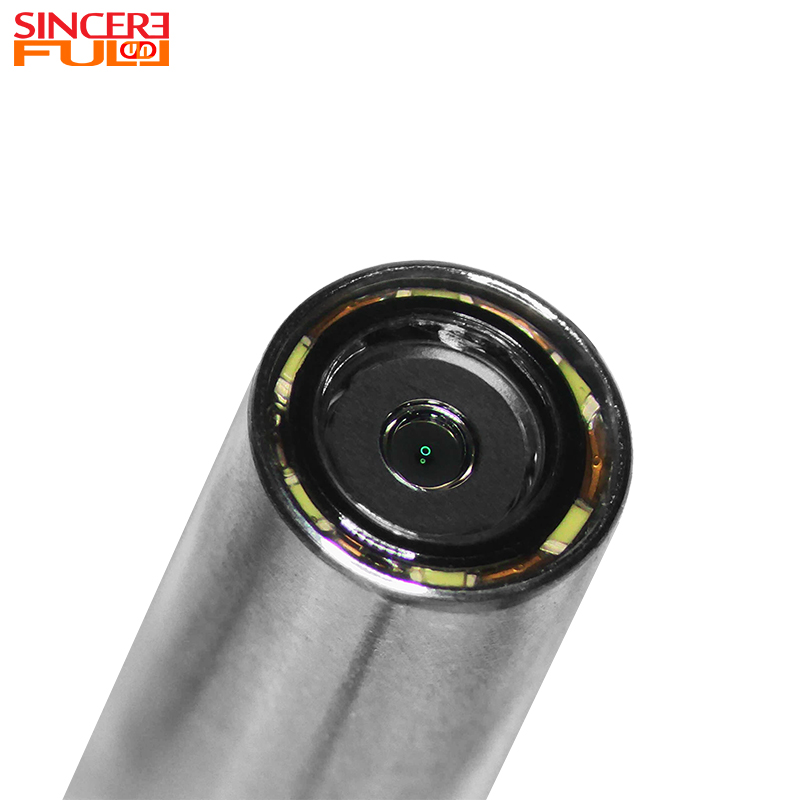
Using standard USB Video Class (UVC) protocols reduces R&D time drastically. A USB endoscope 2MP completely bypasses complex custom driver development. Equipment manufacturers get products to market much faster. You just plug the device in and start capturing video immediately. Custom drivers often break during routine operating system updates. UVC compliance eliminates this painful software maintenance burden entirely.
Cross-platform compatibility offers massive engineering and development flexibility. Native plug-and-play support covers all major operating systems globally. You avoid writing platform-specific code entirely.
Windows Platforms: Supports legacy and modern builds for widespread clinical workstation integration.
macOS Systems: Seamlessly feeds video into high-end clinical review stations.
Linux Environments: Perfect for embedded industrial systems and ruggedized field tablets.
Android Devices: Enables highly portable, smartphone-based diagnostic tools for remote fieldwork.
Expert Tip: Connect this hardware directly to affordable developer boards like Raspberry Pi. You can also integrate popular computer vision libraries like OpenCV easily. This hardware setup enables automated defect recognition for factory lines. AI-assisted medical imaging relies heavily on these standardized, accessible development environments.
Data interoperability improves significantly across enterprise networks. A mini USB camera routes raw data incredibly smoothly. You can send video directly into existing hospital networks. Industrial software ecosystems accept the digital feed seamlessly. You never need expensive, proprietary video capture cards. This streamlined architecture lowers system complexity and failure rates.
Different industries present highly unique operational demands. We structure these specific use cases using a simple requirement-versus-reality framework. A 2MP endoscope adapts remarkably well across sectors. You simply must engineer the outer housing correctly for the environment.
Minimally invasive surgical procedures rely on ultra-compact imaging entirely. Doctors use these precise units for specific laparoscopy operations. Dental and veterinary endoscopy also benefit massively from 2.9mm designs. The small diameter reduces patient trauma during internal investigations significantly.
Crucial Consideration: The raw camera module demands proper, hygienic encapsulation. You must pair it inside an FDA or CE-compliant housing. The exterior must withstand rigorous chemical sterilization protocols daily. Autoclave survival requires specialized thermal potting and high-grade sapphire glass covers.
Industrial technicians inspect difficult-to-reach internal areas daily. Common field applications include precise automotive engine cylinder inspection. Aerospace maintenance teams use them for deep turbine blade checks. Precision plumbing pipe assessment requires crystal-clear internal visuals constantly.
Crucial Consideration: Industrial environments involve harsh chemicals and abrasive liquids. The protective housing requires rigorous IP67+ waterproof ratings minimum. Oil-resistant external cabling prevents premature equipment failure in oily garages and aviation hangars.
System integrators must choose between 0-degree direct view and 90-degree side-view prisms. Direct view works exceptionally well for straight pipe runs. Side-view prisms let you closely inspect lateral cylinder walls without bending the camera shaft.
Note: Human operators require specialized training for 90-degree views. The spatial orientation reverses laterally through the optical prism. Moving a tool left makes it appear to move right on the screen. This tricky visual shift takes deliberate practice to master safely.
Application Vertical | Primary Use Cases | Required Housing Standards |
|---|---|---|
Medical/Clinical | Laparoscopy, Dentistry, Veterinary | FDA/CE Compliant, Sterilizable, Biocompatible |
Industrial (NDT) | Engine Check, Turbine Maintenance | IP67+ Waterproof, Oil-Resistant Cabling |
Unit price only tells part of the procurement story. You must strictly evaluate overall build quality and operational lifespan. Focus heavily on optical fiber durability and outer cable resilience. A reliable HD camera module maintains consistent image clarity over many years. You should also map out routine lens calibration requirements. Cheap modules degrade quickly and require constant replacement.
Follow this rigorous 3-step vendor verification process to secure dependable hardware:
Factory Audit: Verify internal quality control systems thoroughly. Check for active compliance certifications carefully. Medical applications specifically require strict ISO 13485 manufacturing certification. Documented cleanroom standards matter immensely for optical clarity.
Sample Testing: Procure initial engineering samples early. Run clinical or field simulations aggressively. Assess real-world frame rate stability under intense processor stress. Verify focal length accuracy across different target distances. Measure heat output after sixty minutes of continuous operation.
Data Transparency and Lead Times: Review the supplier's actual delivery history. Look for documented on-time delivery rates strictly above 95%. Consistent supply chains prevent massive downstream production bottlenecks entirely. Ask for references regarding global shipping reliability.
Procurement behaves quite differently during early prototyping versus mass production. Expect standard industrial and medical module MOQs to range between 50 to 100 units. Prototyping phases usually bypass these strict manufacturing minimums completely. Vendors understand engineers need small test batches initially.
Standard customized samples require moderate patience. Adjusting exact focal lengths takes time on the assembly line. Modifying USB cable lengths also extends production schedules slightly. Lead times typically span 7 to 15 working days. You will likely incur a minor initial sample fee. Expect to pay anywhere between $50 and $200 initially. Suppliers often deduct this sample fee from your eventual bulk order smoothly.
Understand your hardware customization boundaries before starting any project. Misunderstanding these limits causes costly delays.
Easily Modified Boundaries: Cable length, maximum LED intensity, and output connector types change easily. Vendors handle these minor tweaks quickly. They require minimal engineering oversight.
High NRE Cost Boundaries: Custom alternative sensor integration requires significant Non-Recurring Engineering investments. Bespoke DSP (Digital Signal Processing) tuning also demands high upfront engineering costs. Color matrix adjustments for specific human tissues take weeks to perfect. Custom printed circuit board layouts require complete redesigns.
The 2.9mm module utilizing this specific optical sensor represents a powerful R&D sweet spot. It perfectly balances extreme physical miniaturization and diagnostic-grade image clarity. Standard UVC support eliminates frustrating software friction completely. You bypass costly custom driver maintenance permanently.
Engineers must define strict project parameters clearly before proceeding. Pinpoint your exact target focal length immediately. Calculate your specific required Depth of Field (DoF) for precise inspections. Finalize your target software environment early. Take these actionable steps before requesting expensive engineering samples for integration testing. Clear requirements guarantee faster development cycles and superior final products.
A: It typically ranges from 10mm to 100mm depending on the integrated lens. You can customize this distance based on your needs. Close-up macro inspection requires shorter focal lengths. Broader cavity viewing requires longer ranges for deep structural visibility.
A: No, standard UVC compliance allows it to operate without one. The camera processes and transfers video data directly through the USB interface. It routes data straight to the host device's CPU or GPU seamlessly.
A: Heat dissipation remains a primary challenge in sub-3mm housings. Prolonged use at maximum LED brightness and 60fps can cause thermal noise. Engineers must evaluate specific duty cycles or use thermal-conductive potting materials during R&D to prevent sensor degradation.
A: Yes, you can interface the USB output with a Wi-Fi transmitter board. However, this introduces notable latency and battery footprint considerations. You must map these new variables carefully against your project's strict operational requirements.


