Views: 0 Author: Site Editor Publish Time: 2026-05-15 Origin: Site


For engineers and product managers designing ultra-compact visualization tools, balancing sensor size with diagnostic-grade clarity has historically meant severe compromises. Squeezing high-resolution optics into confined spaces often forces difficult tradeoffs. We usually accept lower image quality simply to fit a camera inside a narrow tube.
A significant shift in micro-optics is changing this dynamic. The OCHFA10 sensor is currently setting a new baseline for the sub-2mm endoscope camera market. It is rapidly overtaking legacy VGA sensors across both clinical and industrial applications.
By integrating an advanced 720x720 CMOS sensor with an ultra-wide angle lens and a universal USB2.0 camera module interface, this architecture eliminates the traditional friction between hardware limitations and rapid cross-platform integration. You will discover how this configuration resolves spatial constraints while delivering sharp, reliable visuals across multiple platforms.
Resolution vs. Size: The OCHFA10 sensor delivers 720x720 resolution at 30fps within a 1.5mm–1.6mm footprint, maximizing pixel density (1.008 µm pixel size) without increasing the probe diameter.
Optical Precision: Features an ultra-wide Field of View (up to 123° diagonal / 86° horizontal) paired with an IR-cut filter and < -11% TV distortion for true-to-life tissue and defect rendering.
Seamless Integration: Native UVC driver-free support via USB 2.0 ensures immediate compatibility across Windows, Linux, macOS, Android, and embedded motherboards.
Clinical & Industrial Durability: Built for rigorous environments, supporting IP67 waterproof ratings and medical-grade sterilization (ETO and STERRAD).
Designers of ultra-micro optics constantly fight a core business problem known as the "Impossible Triangle." You simply cannot maximize every optical specification simultaneously when dealing with millimeter-scale dimensions. The triangle forces you to balance three competing factors:
Physical Size: The absolute outer diameter of the camera probe.
Resolution: The pixel count required to identify minute details.
Low-Light Performance: The ability to capture clear images in dark, enclosed cavities.
For years, legacy models like the OVM6946 represented the best compromise. However, earlier iterations capped out at a 400x400 resolution. This 160,000-pixel output created severe image clarity bottlenecks. In high-precision diagnostic procedures or detailed industrial tasks, 400x400 simply lacks the sharpness to definitively identify subtle tissue pathologies or microscopic fractures in metal.
This is exactly where the OCHFA10 sensor changes the equation. It achieves a massively upgraded 720x720 resolution (over 518,000 pixels) in the exact same footprint. To do this, the architecture utilizes advanced PureCel®Plus-S technology. This specific pixel structure isolates individual pixels to prevent light bleed. You get a higher pixel density (1.008 µm) without expanding the 1.5mm physical diameter.
Upgrading to this higher density is highly financially viable. This viability is especially clear in the disposable, single-use endoscope market. Single-use devices eliminate cross-infection risks entirely. However, they demand strict per-unit cost controls. Because the new sensor relies on scalable wafer-level manufacturing, manufacturers can deliver high-definition clarity without spiking the production costs of single-use probes.
Understanding Field of View (FOV) realities is crucial for navigating micro-cavities. A specialized wide angle endoscope typically provides an 86° horizontal to 123° diagonal FOV. This wide sweeping view minimizes the need for extreme physical camera panning inside tight spaces. Whether navigating complex blood vessels or inspecting complex engine nozzles, a broader perspective reduces physical manipulation. Less panning means a lower risk of tissue trauma or equipment damage.
We also must consider macro focus synergy. Micro-inspection environments lack the physical depth for manual focus adjustments. To solve this, the module utilizes a 5–50mm depth of field. This fixed focal range ensures the camera maintains sharp focus on immediate foregrounds. You can pull the probe back 50mm to see a macro view, or push it within 5mm of a surface for microscopic detail. The image remains crisp without any mechanical focusing mechanisms.
Color fidelity and distortion control represent the final optical hurdles. You must highlight the necessity of an integrated IR-cut filter. Standard CMOS sensors are highly sensitive to near-infrared light. Without a filter, near-infrared light washes out true colors, turning reds to purples and muting contrasts. This color shift is catastrophic when identifying subtle tissue pathology or inspecting oxidized micro-welds. The built-in IR-cut filter restores true-to-life color rendering.
Furthermore, we must address optical integrity through distortion control. Fisheye lenses inherently warp the edges of an image. By keeping TV distortion below -11%, the optics reduce severe edge-warping. A flat, mathematically accurate image ensures that straight lines appear straight, which is essential for accurate spatial measurement inside a cavity.
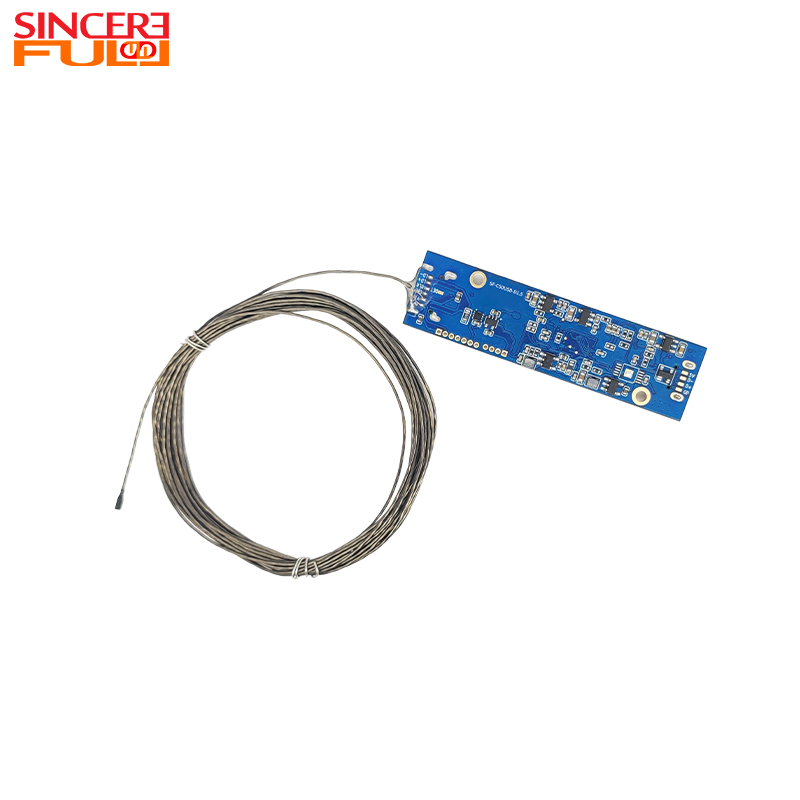
Software development often delays hardware deployment. Standardizing around a USB camera module drastically cuts down this development time. By utilizing Universal Video Class (UVC) standardization, the module bypasses the need for proprietary drivers. You plug it in, and the host operating system instantly recognizes it. This native driver-free support ensures immediate functionality across diverse systems, including Windows, Linux, macOS, Android, and various embedded motherboards.
Bandwidth and data efficiency play a synergistic role here. High-resolution video data demands stable bandwidth. The 720x720 output at 30 frames per second perfectly aligns with USB 2.0 limitations. The sensor stream saturates the connection efficiently without requiring complex onboard data compression. Bypassing heavy compression eliminates video latency. You experience real-time visual feedback, which is non-negotiable during precise manual maneuvers.
Thermal and power management is another critical advantage. Continuous video transmission generates heat. In continuous-use scenarios, probe heating poses a severe risk. If a probe runs too hot, it can damage sensitive biological tissue or degrade internal electronics in confined industrial spaces.
The module operates exceptionally efficiently to mitigate these risks. It requires only about 25mW for sensor power, keeping the system-level power consumption around 80mW. This ultra-low thermal output ensures patient comfort and protects delicate internal components, even during prolonged inspection procedures.
Technical Parameter | Specification | Operational Benefit |
|---|---|---|
Protocol | UVC via USB 2.0 | Zero driver installation; instant cross-platform use. |
Data Output | 720x720 @ 30fps | Latency-free video without heavy compression. |
Power Consumption | ~80mW (System Level) | Minimal heat generation; safe for tissue contact. |
Hardware fails quickly if it cannot survive its working environment. Medical sterilization standards present the toughest challenge. Reusable or semi-reusable medical devices must undergo rigorous sanitization protocols to prevent infection. The sensor demonstrates robust compatibility with critical medical protocols. Specifically, it withstands ETO (Ethylene Oxide) gas and STERRAD (Hydrogen Peroxide Plasma) sterilization. These highly reactive, low-temperature sterilization methods are non-negotiable for modern hospital equipment compliance.
Industrial ruggedness demands an entirely different type of resilience. An inspection camera faces physical shocks, vibrations, and debris. To survive, these modules rely on steel casing and precise manufacturing. They are built inside Class 10/100 COB (Chip-on-Board) cleanrooms to prevent microscopic dust contamination. Furthermore, the integration utilizes Active Alignment (AA). This process uses robotics to perfectly center the lens over the sensor before the structural adhesive cures. Active Alignment keeps the optical axis rock-solid despite repeated physical impacts.
We must also validate the IP67 waterproof rating. A true IP67 rating drastically expands practical applications. It shifts the module from standard dry environments to demanding, fluid-heavy tasks.
Below is a summary chart mapping the IP67 capabilities to specific harsh environments:
Application Domain | Environmental Challenge | IP67 Benefit |
|---|---|---|
Clinical Surgery | Saline flushing and bodily fluids. | Prevents liquid ingress during active fluid irrigation. |
Underwater Maintenance | Submersion during equipment checks. | Survives short-term submersion up to 1 meter deep. |
Automotive Inspection | Oil, coolant, and hydraulic pipe leaks. | Resists chemical splashes and fluid immersion in tight pipes. |
Engineering teams need a concise evaluation lens when shortlisting a micro-camera. We recommend a clear scenario mapping approach to match your specific constraints with the right sensor.
First, evaluate ultra-minimally invasive applications where size is critical. The 1.5mm footprint serves as a strict threshold here. For example, medical catheters are often sized on the French scale, where 6 French equals 2mm. To fit a camera, an illumination source, and a working channel inside a 2mm tube, the camera module itself must sit firmly at or below 1.5mm. Similarly, ultra-fine mechanical nozzles in aerospace manufacturing reject any probe larger than 1.6mm.
Second, evaluate general-purpose applications where you balance cost against clarity. If your target tube diameter exceeds 4mm, you might deploy standard 1/9" sensors. However, when the physical space shrinks below 2mm, but you still require the 720p clarity of a larger sensor, deploying the advanced micro-sensor becomes mandatory.
Finally, engineering buyers must look far beyond raw specifications. Supply chain stability and manufacturing longevity matter just as much as resolution. You should actively verify your OEM's assembly capabilities. Ensure they operate advanced SMT (Surface Mount Technology) and AA (Active Alignment) processes in-house. Securing long-term warranty and reliable support commitments is essential before initiating massive enterprise rollouts.
Deploying ultra-compact visualization tools no longer requires sacrificing image quality. The USB endoscope camera module effectively resolves the age-old conflict between tight spatial constraints and diagnostic-grade image clarity. By doubling the pixel density of legacy models and adding standardized UVC connectivity, it streamlines both optical performance and software integration.
You secure 720x720 clarity inside a sub-2mm footprint.
Native UVC support eliminates tedious driver development cycles.
Robust IP67 and sterilization capabilities ensure survival in hostile environments.
Hardware designers and procurement teams should take immediate action. We encourage you to request evaluation kits today. Consult directly with a module integration specialist to thoroughly test UVC compatibility, depth of field, and thermal performance inside your specific custom housing.
A: Your choice depends entirely on the working environment. Narrower tubes require wider angles (like 120°) to capture the sidewalls simultaneously without panning. Conversely, distant target observation in open cavities benefits from narrower FOVs (around 80°) to prevent excessive spatial distortion.
A: No. It features native UVC (Universal Video Class) compliance. The module operates entirely plug-and-play. It works instantly with standard default camera applications across Windows, Mac, Linux, and Android systems without any custom driver installation.
A: It leverages high-volume, wafer-level manufacturing scalability. This process keeps production costs low while delivering high-definition resolution. When combined with extremely low thermal output and reliable color performance, it becomes economically and clinically viable for disposable tools.
A: Yes. The manufacturing process utilizes Active Alignment (AA) to perfectly center the lens before securing it. Combined with rigid steel casing, this process prevents optical shifting, keeping the image stable even under high physical stress and vibration.


