Views: 0 Author: Site Editor Publish Time: 2026-06-10 Origin: Site


The OV6922 functions as an ultra-compact, 1/18-inch CMOS image sensor. Engineers specifically designed it for minimally invasive medical and industrial applications. While digital sensors dominate consumer electronics today, direct analog output remains a highly strategic choice. Many medical device architectures strictly prioritize low latency, reduced component count, and legacy system compatibility. Balancing distal tip constraints against performance often challenges product managers. You need clear, evidence-based metrics to guide your hardware selection. This article provides hardware engineers, product managers, and procurement teams with a critical evaluation framework. You will learn how to integrate the OV6922 into new or existing endoscope designs smoothly. We will explore optical trade-offs, thermal management, and best practices for signal integrity.
Direct Analog Simplicity: The OV6922 provides a composite video signal (NTSC output camera standard), eliminating the need for complex image signal processors (ISPs) at the distal tip.
Ultra-Compact Footprint: At 1/18-inch, the sensor enables sub-3mm camera modules, critical for disposable catheters and narrow-lumen medical imaging.
Cost-to-Performance Ratio: Ideal for single-use analog endoscope applications where minimizing the Bill of Materials (BOM) cost is a primary success criterion.
Integration Challenges: Analog signal degradation over long cable runs requires careful attention to shielding and cable quality during the prototyping phase.
Many modern consumer devices rely on complex digital sensors. However, the medical field often requires distinct hardware architectures. A direct analog video signal offers unique clinical benefits. Analog signals completely bypass digital encoding and decoding delays. They provide genuine zero-latency visualization. Surgeons rely on this real-time feedback during delicate tissue navigation. Even a few milliseconds of lag can cause procedural errors during critical operations.
Outputting an analog signal also reduces distal tip complexity. The sensor does not require a bulky image signal processor. You eliminate unnecessary microchips at the tip of the medical imaging camera. This directly minimizes heat generation during active use. It also reduces physical space requirements, enabling ultra-slim catheter designs.
Furthermore, many hospitals still operate older imaging infrastructure. Legacy system compatibility remains a massive engineering advantage. You can plug this sensor directly into existing analog CRT monitors. It seamlessly interfaces with standard capture cards. Medical facilities do not need to upgrade to costly digital consoles. This compatibility ensures rapid deployment across various hospital departments.
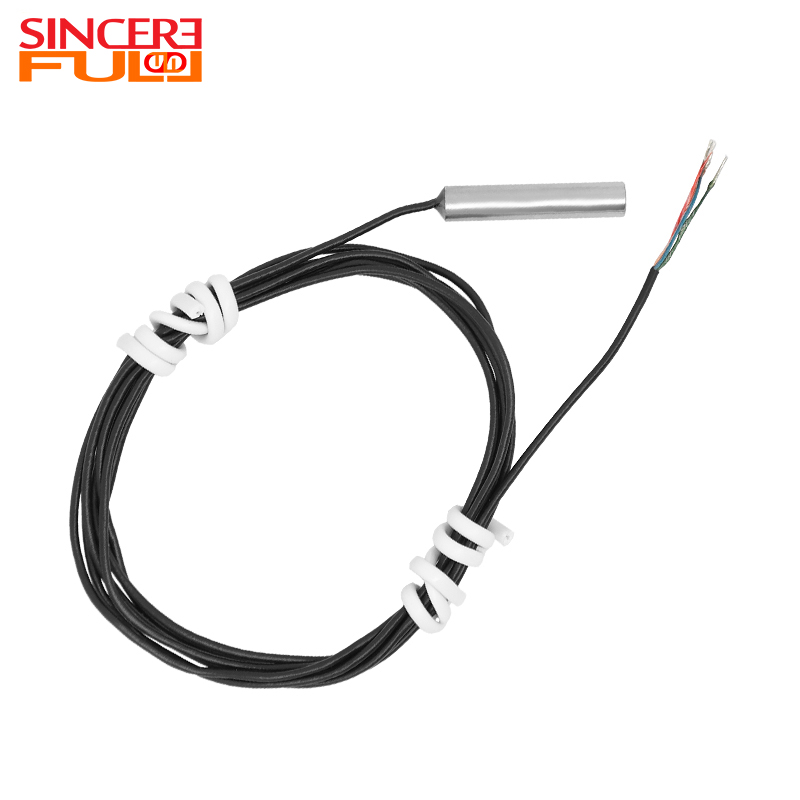
Engineers must evaluate the 1/18-inch sensor size carefully. They must balance physical dimensions against resolution constraints. The sensor delivers a standard 320x240 resolution. Industry professionals often refer to this as 1/4 VGA. It does not provide wide-field diagnostic clarity. Instead, designers optimize this module for extreme proximity viewing. The depth of field typically ranges between 5mm and 50mm. This narrow focus range suits highly specific luminal inspections. The OV6922 camera module captures clear details of adjacent tissue surfaces. It works best when navigating tight anatomical structures.
Thermal management dictates safety in minimally invasive procedures. Tissues suffer damage if device temperatures rise too high. You must maintain strict temperature limits at the distal tip. Fortunately, this sensor features exceptionally low power requirements. Active power consumption typically stays below 20mW. This minimal power draw directly translates to enhanced patient safety. Engineers can design longer operational times for prolonged surgical procedures. They do not need complex heat dissipation materials. This simplifies the mechanical housing design considerably.
You cannot capture clear images in dark anatomical spaces. Proper illumination integration is vital for module success. Engineers typically pair the sensor with micro-LED components. Alternatively, they use thin fiber-optic light guides. These lighting solutions must fit seamlessly alongside the sensor. They must coexist within a strict 3mm to 4mm total diameter. You must carefully align the light source to prevent lens glare. Proper optical isolation blocks internal reflections from reaching the sensor surface.
Analog systems face distinct technical risks during integration. Signal attenuation and electromagnetic interference (EMI) present major challenges. Medical environments feature heavy electronic noise from other equipment. Engineers must carefully protect the composite video signal. You need specific strategies to maintain a clean NTSC output camera signal. Cable runs often stretch between 1 and 3 meters. Standard wires will degrade the image quality severely over this distance.
Consider these micro-coaxial cable best practices:
Select copper-braided shielded micro-coaxial cables to block external EMI.
Minimize the number of connector joints along the signal path to prevent loss.
Use twisted-pair configurations for power delivery to reduce crosstalk.
Validate precise impedance matching between the sensor output and the display input.
Medical devices demand rigorous sterilization capabilities. You must carefully assess module packaging requirements. Sourcing raw silicon sensors requires custom encapsulation techniques. Engineers must design robust seals using medical-grade adhesives. Pre-packaged modules offer a faster integration path. However, you must evaluate their resilience against harsh environments. Chemical sterilization methods like ethylene oxide (EtO) gas test seal integrity. Repeated autoclaving imposes extreme heat and pressure stress. You must verify IP67 or IP68 ratings for any ov6922 endoscope camera exposed to bodily fluids.
The physical image sensor remains fixed. However, lens pairings offer significant customization options. Typical lens assemblies provide a Field of View ranging from 90° to 120°. Selecting the appropriate micro-lens dictates clinical suitability. Engineers match the FOV to specific medical disciplines. A narrower FOV often benefits forward-viewing procedures. A wider FOV helps physicians navigate complex internal junctions.
Medical Discipline | Typical FOV Requirement | Primary Clinical Application |
|---|---|---|
Bronchoscopy | 90° - 100° | Navigating narrow airway passages safely. |
Urology | 110° - 120° | Inspecting bladder walls and duct junctions. |
Otolaryngology | 90° | Detailed ear and sinus cavity inspection. |
Hardware teams must acknowledge specific performance ceilings. The OV6922 cannot compete with modern high-definition sensors. Some clinical requirements demand minute tissue differentiation. Physicians might need to identify subtle cellular abnormalities. In these scenarios, the 320x240 analog resolution falls short. A digital alternative becomes strictly mandatory for such advanced diagnostic work.
Engineers frequently compare this analog solution to its digital successors. The OV6946 represents a common modern upgrade path. It offers a higher 400x400 resolution. It outputs a digital MIPI or SPI signal rather than an analog wave. This chart illustrates the primary trade-offs between the two architectures.
Feature | OV6922 (Analog) | OV6946 (Digital) |
|---|---|---|
Output Format | Composite NTSC/PAL | Digital MIPI/SPI |
Resolution | 320 x 240 (1/4 VGA) | 400 x 400 |
Distal Tip ISP | Not Required | Requires minimal processing |
Latency | Near-Zero | Very Low (Encoding Dependent) |
Signal Risk | EMI / Analog Attenuation | Digital Jitter / Frame Drop |
Do not specify this sensor for advanced reusable scopes. Reusable systems often require sophisticated digital image enhancement. They rely on high-definition monitors for precise surgical work. You should also avoid this module if the target hospital console lacks analog inputs. Modern digital-only displays require external analog-to-digital converters. Adding converters introduces unwanted latency. It completely defeats the primary benefit of an analog endoscope.
Bare Sensor vs. Assembled Module: Procurement teams face a critical initial choice. They can buy raw OmniVision silicon directly. Alternatively, they can procure fully assembled modules combining the sensor, lens, and cable. Specialized B2B integration partners supply these pre-built units. Buying raw silicon requires extensive in-house optical assembly capabilities. Pre-assembled modules significantly accelerate the overall product development lifecycle.
Quality Control in Manufacturing: Manufacturing microscopic cameras demands extreme precision. You must thoroughly emphasize the importance of supplier vetting. Ask partners about their cleanroom assembly standards. Microscopic dust particles easily ruin sensor functionality. Consistent focal length calibration separates reliable suppliers from poor ones. Always request ISO certifications before placing large orders.
MOQ and Lifecycle Reliability: Component lifecycles directly impact medical device longevity. Procurement teams must verify long-term silicon availability. The underlying architecture of this sensor is older. You must secure guarantees against sudden obsolescence. Negotiate Minimum Order Quantities (MOQs) carefully with distributors. Proper planning avoids costly mid-lifecycle redesigns of crucial medical equipment.
This sensor occupies a highly specific engineering niche. It remains a utility-driven component for specialized clinical applications. It perfectly serves low-cost, ultra-small analog device architectures. Single-use devices rely heavily on its robust and reliable simplicity. Engineers deeply value the true zero-latency visualization it provides during navigation.
We recommend clear next steps for hardware development teams. First, procure a low-volume evaluation kit (EVK). Test the analog signal clarity over your exact intended cable length. Validate the performance in a simulated medical environment before committing funds to custom lens tooling. Early physical testing reliably prevents expensive redesigns later in the project timeline.
A: The standard cable length typically ranges from 1 to 3 meters. Exceeding 3 meters increases the risk of signal attenuation and EMI degradation. Engineers must use high-quality shielded micro-coaxial cables to maintain image clarity over these extended distances.
A: It cannot interface directly with digital USB displays. The sensor outputs an analog composite signal. You must use an external analog-to-digital video capture card or an inline converter to display the feed on modern USB-based monitors or computers.
A: The NTSC version outputs video at 60 fields per second with specific color encoding utilized primarily in North America. The PAL version operates at 50 fields per second. You must match the sensor version to the regional standard of your display hardware.
A: Yes, it is highly suitable for single-use applications. Its ultra-compact size and low component cost make it ideal for disposable catheters and single-use endoscopes. It eliminates expensive digital processors, helping manufacturers maintain strict budgetary limits for disposable medical tools.


