Views: 0 Author: Site Editor Publish Time: 2025-11-25 Origin: Site


When choosing inspection tools for industrial purposes, precision, efficiency, and reliability are key. In many industries, the ability to inspect internal components or hard-to-reach areas without dismantling equipment is crucial. This is where borescopes and endoscope camera modules come into play. While these two types of inspection cameras share similar functionality, they differ significantly in design, applications, and features. Understanding the nuances between them is vital for businesses in sectors like manufacturing, automotive, aerospace, and maintenance.
In this article, we’ll compare borescopes and endoscope camera modules, focusing on their design, applications, advantages, and which one may be the best fit for your industrial inspection needs. By the end of this comparison, you’ll have a clearer understanding of these devices and be able to make an informed decision when purchasing for your business.
A borescope is a type of inspection device designed for viewing the interior of narrow, hard-to-reach spaces, such as pipes, engine components, or machines without the need for disassembly. The term "borescope" is often used in the context of industrial inspections and is specifically designed for situations where the space to be inspected has limited access or visibility.
Borescopes typically feature a rigid or flexible probe, with a camera at the end, that can be inserted into tight openings to capture images or videos of internal areas. The camera transmits the visual data to an external display, allowing operators to assess conditions without physically accessing the interior.
An endoscope camera module is similar to a borescope but generally offers more flexibility in terms of its probe design and functionality. An endoscope camera module typically refers to a camera system that is used to view internal parts of machinery, vehicles, or even the human body (in medical applications). It consists of a camera attached to a flexible tube that is capable of bending and navigating around obstacles inside a structure.
Endoscope camera modules are equipped with high-resolution cameras, LED lighting, and often include a range of accessories for specific applications, such as various lengths and diameters of probes. The images or videos captured by the camera are transmitted to a screen, and in some cases, they can be saved or analyzed digitally.
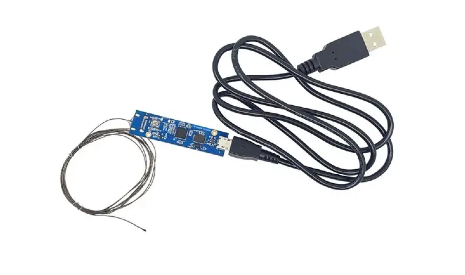
While both borescopes and endoscope camera modules are used for visual inspections, several critical differences distinguish the two. These differences are crucial for businesses when choosing the right tool for specific industrial tasks. Let’s compare their design, flexibility, applications, and performance.
One of the most notable differences between borescopes and endoscope camera modules is their design and flexibility.
Borescope: Borescopes typically come in rigid or semi-rigid designs. The rigid models have a stiff probe that doesn’t bend, which limits their ability to navigate around curves or obstacles. However, rigid borescopes are ideal for straight-line inspections, such as those within pipes or engine cylinders, where the line of sight is straightforward. Some borescopes feature articulating tips that allow the camera head to move, offering a bit more flexibility.
Endoscope Camera Module: Endoscope camera modules, on the other hand, are known for their flexible probes. This flexibility makes them more versatile for inspections in complex or confined spaces. The flexible design allows the camera to maneuver around obstacles, navigate curves, and reach areas that a rigid borescope would struggle with. This makes endoscopes ideal for applications that require navigating through complicated areas, such as machinery with several internal parts or areas where access is not perfectly straight.
In summary, if your inspection task involves navigating around bends or tight spaces, an endoscope camera module is likely the better choice due to its flexibility. If the area to be inspected is more linear and straight, a borescope could be sufficient.
Both borescopes and endoscopes are used across various industries, but their specific applications can vary due to their design differences.
Borescope Applications: Borescopes are widely used in industries like aerospace, automotive, and power generation. They are primarily employed for inspecting the internal parts of engines, turbines, or piping systems. The rigid design of borescopes is especially useful when inspecting straight components such as combustion chambers, turbine blades, or engine cylinders.
Automotive industry: For inspecting engine components like cylinders, pistons, and valves.
Aerospace industry: To examine aircraft engines, turbines, and landing gears.
Oil & gas: For inspecting pipelines and drilling equipment to ensure integrity and identify potential issues.
Endoscope Camera Module Applications: While endoscopes are also used for similar inspections, their flexibility makes them the tool of choice for more intricate inspections in environments that require navigating around several obstacles. Industries that rely on endoscope camera modules include electronics manufacturing, medical applications, automotive diagnostics, and industrial maintenance.
Medical applications: For internal visual inspections (e.g., laparoscopy or endoscopy).
Electronics manufacturing: Inspecting printed circuit boards (PCBs) for faults or defects.
Industrial maintenance: Inspecting machinery and equipment for wear and tear without disassembling parts.
Due to their flexibility, endoscopes are often preferred in fields requiring high maneuverability and versatility. In contrast, borescopes excel in straightforward inspections, particularly in heavy industries.
Both borescopes and endoscope camera modules offer high-resolution imaging for detailed inspections, but the specifics can vary between the two types of devices.
Borescope: Borescopes generally offer high-quality images in well-lit conditions, especially rigid models with high-resolution lenses. They are designed to capture sharp images for inspection tasks such as checking for corrosion, cracks, or blockages. However, since many borescopes are designed for more straightforward inspections, they may not always provide the same flexibility when dealing with lighting challenges or angled views.
Endoscope Camera Module: Endoscope camera modules often come equipped with adjustable LED lighting, ensuring that clear images can be captured in dark or poorly lit environments. Additionally, endoscopes tend to offer superior optical zoom, variable focus, and high-definition resolution that are ideal for capturing clear, detailed visuals of complex or intricate parts. Many modern endoscopes even feature Wi-Fi or Bluetooth connectivity, allowing real-time streaming and wireless data transfer to smartphones, tablets, or computers.
In terms of image quality, both tools can offer high resolution, but endoscope modules generally have the advantage in complex inspection environments due to their ability to handle varying lighting and angles.
Cost can be a significant factor when deciding between a borescope and an endoscope camera module. Generally, borescopes tend to be more affordable than endoscopes, especially rigid models. Their simpler design and limited flexibility mean they can come at a lower price point, making them a more budget-friendly option for businesses with basic inspection needs.
On the other hand, endoscope camera modules, particularly those with advanced features like flexible probes, high-definition imaging, and wireless connectivity, can be more expensive. The added versatility, flexibility, and features do come with a higher cost, but for industries that require precise inspections in confined or complex spaces, the investment can be worthwhile.
Both types of devices are designed for ease of use, but the complexity of the tool depends on its design.
Borescope: With its rigid or semi-rigid design, a borescope is typically easier to operate for straight-line inspections. The simplicity of the device makes it easy to learn and use quickly, and maintenance is typically straightforward, mainly involving cleaning the lens and checking the probe for wear.
Endoscope Camera Module: Due to the flexible design, endoscopes may require more careful handling to avoid damaging the probe or the camera. However, their versatility and added features often justify the additional learning curve. Maintenance may involve checking for probe flexibility, replacing LED lights, or cleaning the camera lens.
The choice between a borescope and an endoscope camera module depends largely on the specific requirements of your business and the inspection tasks you need to perform.
Choose a Borescope if:
You need to inspect long, straight pipes, tubes, or engine components.
The inspection environment is relatively simple, with minimal obstructions.
You are working with a tighter budget and require a reliable, cost-effective solution for routine inspections.
Choose an Endoscope Camera Module if:
Your inspections require greater flexibility to navigate around obstacles, bends, or intricate parts.
You need higher image quality, advanced lighting features, or wireless connectivity.
You’re inspecting complex machinery, electronics, or medical systems, where versatility and high-definition imaging are paramount.
In the industrial world, both borescopes and endoscope camera modules are invaluable tools for inspecting hard-to-reach spaces. The right choice depends on your specific needs, the type of inspections you regularly perform, and your budget.
For straightforward, high-resolution inspections in more accessible spaces, a borescope may be the ideal tool. However, if you need flexibility, high-definition imaging, and more advanced features, an endoscope camera module will offer the versatility and quality that your business requires. Whether for industrial maintenance, automotive diagnostics, or medical applications, these devices provide efficient, cost-effective solutions that improve operational efficiency.
At Guangzhou Sincere Information Technology Co., Ltd., we specialize in providing high-quality inspection tools, including both borescopes and endoscope camera modules. Whether you need a simple borescope for everyday inspections or a sophisticated endoscope for complex diagnostics, our products are designed to meet your exact needs and improve your business operations.


