Views: 0 Author: Site Editor Publish Time: 2026-01-14 Origin: Site


Ever wondered how professionals inspect areas too small for traditional tools? Micro endoscopes are revolutionizing this. These tiny devices, under 2mm, offer clear visuals for medical and industrial procedures.
In this article, we’ll explore what micro endoscopes are and how they work. You’ll also learn about their applications and benefits, with insights into products like those from SincereFull.
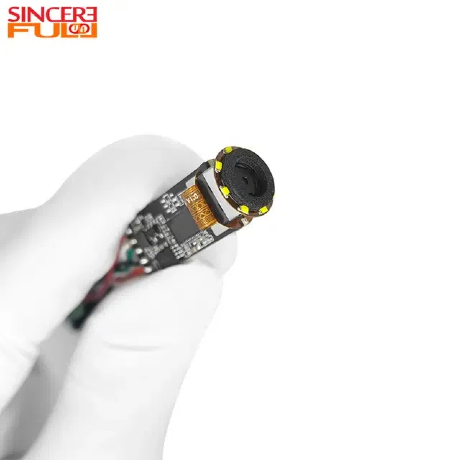
A micro endoscope is a miniature, flexible tube fitted with a camera and light source designed for examining internal structures or small industrial parts. With diameters as small as 0.9mm, these devices enable professionals to access spaces that are otherwise difficult or impossible to reach. The small size and flexibility allow them to navigate through tight passages with ease, making them invaluable in both medical and industrial applications.
Micro endoscopes are used extensively in medical diagnostics and minimally invasive surgeries. They are also employed in industries requiring high-precision inspections, such as electronics, manufacturing, and aerospace.
Micro endoscopes function through the use of fiber optics and advanced imaging technology. Light is transmitted through optical fibers to illuminate the area being examined, and the camera at the tip captures the reflected light, which is then displayed on a monitor. This real-time visualization allows for clear and detailed images, facilitating accurate diagnoses and effective treatments.
Modern micro endoscopes use high-definition imaging technology to provide exceptional clarity despite their small size. Some models, like those with integrated LED lighting systems, enhance visibility, ensuring that images remain clear even in dimly lit environments.
The core technologies that enable the function of micro endoscopes include:
● Miniaturized Cameras: The camera systems used in micro endoscopes are compact yet powerful, delivering high-quality images.
● Flexible Fibers: Fiber optics provide the flexibility to navigate through tight and curved spaces.
● Advanced LED Lighting: Built-in LEDs ensure adequate illumination for detailed images in dark or narrow spaces.
For specialized applications, micro endoscopes may also feature more advanced technologies, like two-photon and three-photon imaging systems, to allow for deeper tissue penetration and higher-resolution images.
In the veterinary field, micro endoscopes are used to perform diagnostic procedures in small animals. These include:
● Rhinoscopy: Examining the nasal passages in animals, particularly small pets.
● Otoscopy: Visualizing the ear canal to diagnose infections or foreign objects.
● Airway Assessments: Inspecting the airways of small animals such as rodents or birds.
These applications help veterinarians diagnose conditions with minimal discomfort to the animal, avoiding invasive surgeries and allowing for more precise treatments.
Procedure | Micro Endoscope Application | Benefit |
Rhinoscopy | Examining nasal passages in small animals | Minimizes discomfort while providing accurate diagnostics |
Otoscopy | Viewing the ear canal of pets and animals | Helps diagnose ear infections or foreign bodies |
Airway Assessments | Inspecting airways in small animals | Non-invasive, accurate airway diagnostics |
In human medicine, micro endoscopes are used for a variety of procedures, including:
● Gastroenterology: Micro endoscopes can examine the digestive tract, reaching areas that larger instruments might not.
● Urology: They are used for non-invasive procedures like bladder examinations and catheter placements.
● ENT (Ear, Nose, and Throat): These devices help physicians examine the nasal passages, sinuses, and ears.
Micro endoscopes make procedures less invasive, reducing the risk of complications and improving recovery times. The flexibility and small size of these devices allow for a wider range of diagnostic and surgical options, even in the smallest of spaces.
In industrial settings, micro endoscopes are essential for inspecting hard-to-reach areas within machinery, electronics, and other complex systems. Some common applications include:
● Turbine Blades: Inspecting turbine blades and engine parts for damage or wear.
● Electronics: Checking the internal components of electronic devices for defects.
● Fine Tubing: Ensuring the integrity of micro-tubing used in industries like pharmaceuticals and food processing.
These inspections help identify issues before they cause major damage, saving time and costs in maintenance and repair processes.

The small size of micro endoscopes, with diameters ranging from 0.9mm to 2mm, makes them perfect for accessing confined spaces. The flexibility of these devices allows them to navigate through tight or curved passages, which is especially valuable in medical diagnostics and industrial inspections where traditional tools would be too large to use.
Feature | Description | Benefit |
Diameter | Ranges from 0.9mm to 2mm | Enables access to narrow or tight spaces |
Flexibility | Flexible or semi-rigid design | Allows navigation through complex or curved areas |
Applications | Medical (e.g., gastroenterology) and industrial (e.g., turbine blades) | Ideal for both invasive medical diagnostics and precise industrial inspections |
Micro endoscopes provide high-definition imaging despite their compact size. Advanced optics and tiny CMOS sensors at the tip of the endoscope allow for clear, detailed visuals, which are crucial for accurate diagnoses and precise treatments. This high-resolution capability ensures that medical professionals can identify even the smallest abnormalities.
Micro endoscopes often come equipped with integrated LED lights that ensure consistent illumination, even in dark or narrow spaces. This built-in lighting enhances image quality and allows for clear visualization during medical procedures or industrial inspections, even when external light sources are unavailable.
Micro endoscopes rely on fiber optics and CMOS sensors to capture and transmit images. Fiber optics enable the delivery of light to the examined area, while the CMOS sensor at the tip of the device captures the reflected light and transmits it to a monitor. This combination ensures clear and accurate imaging, which is critical for both diagnosis and treatment.
Recent advancements in microendoscopy have introduced two-photon and three-photon microscopy. These techniques use ultrafast lasers to generate higher resolution images and greater penetration depths, making it possible to examine tissues more deeply than traditional methods allow. This new technology opens up new possibilities for real-time in vivo imaging, particularly in fields like neuroscience.
Micro endoscopes offer a major advantage by enabling minimally invasive procedures. Traditional surgery often involves large incisions, which can lead to longer recovery times and higher risks of infection. In contrast, micro endoscopes only require small incisions, reducing trauma to surrounding tissue and accelerating recovery.
The flexibility of micro endoscopes allows them to navigate through complex and curved pathways. This adaptability makes them ideal for a wide range of medical and industrial applications. Whether it's a gastrointestinal examination, a urological procedure, or inspecting the internal components of machinery, micro endoscopes provide precise, flexible solutions.
Because micro endoscopes are used with small incisions, they reduce the risk of infection compared to traditional surgery. Smaller incisions minimize tissue disruption, which helps to prevent complications and speeds up recovery.
As technology continues to evolve, micro endoscopes are expected to become even more advanced. Researchers are working on enhancing resolution, penetration depth, and overall performance. New innovations, such as improved two-photon and three-photon imaging, promise to expand the capabilities of micro endoscopes even further.
Technology | Description | Potential Impact |
Two-Photon Microscopy | Uses ultrafast lasers for higher resolution and better tissue penetration | Expands applications for deeper tissue imaging, especially in brain studies |
Three-Photon Microscopy | Provides even deeper tissue penetration and improved resolution | Opens possibilities for advanced imaging in live tissue and real-time diagnostics |
Ongoing efforts to reduce the size of micro endoscopes while maintaining high performance will lead to even more compact and powerful devices. These advancements will allow for even greater precision in both medical and industrial applications, with fewer limitations on where and how these devices can be used.
Micro endoscopes are expected to see wider adoption in both medical and industrial sectors. In medicine, the demand for real-time, in vivo imaging will continue to grow, providing clinicians with more accurate and timely diagnostic tools. In industry, micro endoscopes will play an increasing role in ensuring the integrity of complex machinery and systems.
When choosing a micro endoscope, consider factors such as size, flexibility, resolution, and ease of use. Whether you need a device for a delicate medical procedure or for inspecting small industrial parts, it's important to select a micro endoscope that meets your specific requirements.
Micro endoscopes are especially useful in situations where traditional tools cannot reach. Their small size and flexibility make them ideal for procedures that involve tight spaces or complex pathways.
Micro endoscopes are essential tools in both medical and industrial fields. Their small size, high-resolution imaging, and flexibility make them perfect for various applications. As technology advances, micro endoscopes will continue to evolve, offering better diagnostics and more efficient procedures. Products from SincereFull provide exceptional value, offering high-performance solutions for medical and industrial inspections.
A: A micro endoscope is a small, flexible tool used to view hard-to-reach areas. It helps in medical diagnostics and industrial inspections.
A: A micro endoscope uses fiber optics and a small camera to capture real-time images. It provides high-resolution visuals in tight spaces.
A: Micro endoscopes enable minimally invasive procedures, offering faster recovery and reduced risk of infection compared to traditional methods.
A: Micro endoscopes are used in medical fields like gastroenterology and urology, as well as in industrial sectors for detailed inspections.


