Views: 0 Author: Site Editor Publish Time: 2026-06-13 Origin: Site


In endoscope camera module development, the distal tip operates inside a tight, low-light, and integration-sensitive environment. Device teams need stable visual data, controlled heat, reliable signal transmission, and a sensor package that can be verified against the requirements of the final application. Over recent years, the transition from legacy CCD to advanced CMOS architectures has changed how compact imaging hardware is designed. Engineers now balance sensor footprint, lens structure, illumination, waterproofing, cable routing, and image clarity as one system. This article explains how to evaluate a high resolution CMOS sensor device for endoscope integration without relying on vague labels or exaggerated claims.
Miniaturization vs. Resolution: High-resolution CMOS sensors can support compact probe designs, but image detail still depends on optics, illumination, signal processing, and the final use environment.
Integration Realities: An endoscope camera module for regulated or healthcare-related device projects should account for distal-tip heat, image signal processing (ISP) latency, cable routing, and verification data.
Documentation Should Be Verified: Component selection should be matched with the final device pathway, including supplier quality records, material documentation, ingress protection, and sterilization-resilience data where applicable.
Supplier Vetting: Evaluating an endoscope camera module supplier requires checking production consistency, customization capability, test records, and lifecycle support.
Endoscope product teams often face pressure to reduce probe diameter while improving visual detail. Smaller imaging heads can make integration easier in narrow channels, but compact design also limits lens space, illumination power, cable routing, and heat dissipation. At the same time, many projects now evaluate HD, Full HD, or higher-resolution video according to the display system, processor capability, and application requirements. This dual demand forces engineering teams to rethink the full electronic and optical architecture.
Historically, charge-coupled devices (CCD) were widely used in precision optical systems. They offered good light sensitivity for dark cavities and inspection channels. However, they consumed more power and often required larger external processing hardware. Today, a modern CMOS endoscope has become a common choice for compact imaging integration. CMOS architecture offers practical advantages in many designs. It can reduce power consumption, limit heat buildup, and simplify the image-processing pathway when the sensor, lens, lighting, and interface are properly matched.
These hardware shifts improve the way endoscope systems can handle real-time observation. Higher frame rates help video remain smooth during movement. Better low-light performance supports clearer viewing in narrow or enclosed spaces where illumination is limited. Accurate color and controlled glare can help operators read subtle surface differences more consistently. Looking ahead, sensor capability, multispectral imaging, and AI-ready image outputs may further expand how compact endoscope systems support inspection, observation, and decision-support workflows.
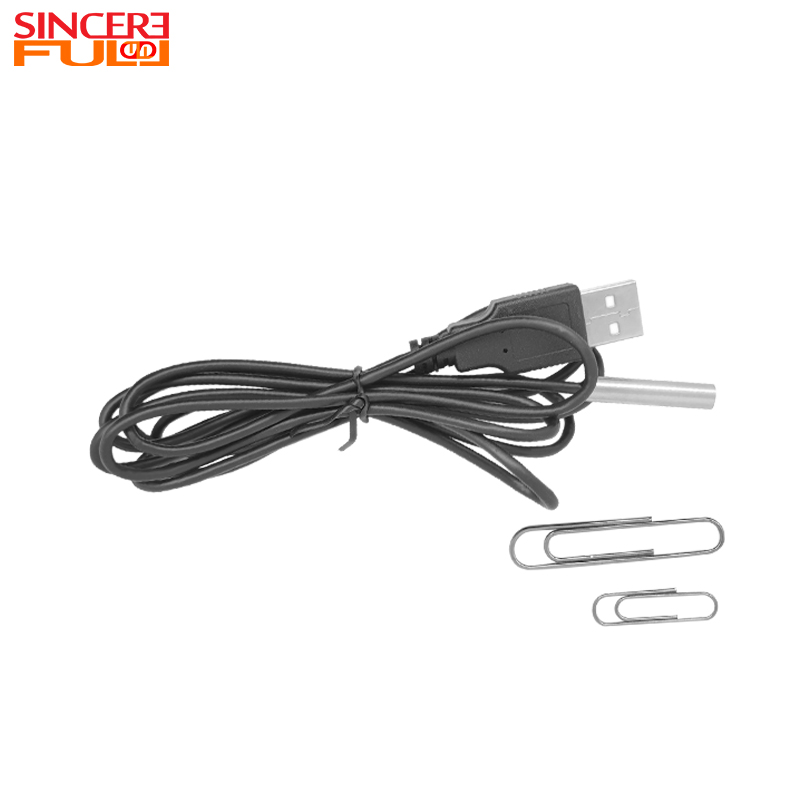
When selecting a BF20A6 CMOS sensor USB endoscope camera module, physical size directly dictates core functionality. Engineers should categorize these imaging solutions by defined form factor constraints.
Form Factor Category | Diameter Range | Typical Application Areas | Engineering Trade-offs |
|---|---|---|---|
Ultra-Compact Modules | 1.0mm - 3.9mm | Micro-endoscope development, narrow-channel inspection, specialized compact probes | Redefineded focal length, highly complex illumination requirements |
Standard High-Res Modules | 4.0mm and above | Rigid endoscope designs, larger insertion channels, high-detail inspection tools | Requires larger rigid or semi-rigid housings |
Ultra-compact modules fit inside very narrow lumens. They reduce procedural invasiveness significantly. However, they introduce severe design trade-offs. Optical focal length is often redefineded. Achieving adequate illumination also becomes a critical engineering hurdle in such tight spaces. Conversely, standard modules prioritize 1080p or 4K resolution. They naturally offer wider fields of view. Larger sensors capture more photons, vastly improving overall image clarity.
Output interfaces form the next major architectural choice. We should evaluate three main communication protocols based on required data bandwidths:
USB Outputs: These provide excellent plug-and-play capability. They are universally compatible across various hospital host systems.
MIPI CSI-2: This protocol handles significant data bandwidth for seamless 4K video. However, physical cable length remains severely limited without adding active repeaters.
Analog Outputs: These legacy formats remain useful definedly for interfacing older, existing host displays or legacy monitors.
Finally, you should carefully consider illumination integration. You can assess modules featuring pre-integrated micro-LED rings. These save internal space but generate localized junction heat. Alternatively, you can use traditional fiber-optic light guides. Fiber-optics keep the primary heat source outside the compact probe head. However, they notably increase the overall umbilical cable diameter.
A rigorous, data-driven evaluation framework helps engineering teams select a reliable endoscope camera module for healthcare-related, industrial, or customized imaging projects. The assessment should focus on measurable image-quality metrics, integration limits, and verification requirements rather than broad labels.
Resolution and Pixel Size: Engineering teams should balance overall pixel density against signal-to-noise ratio. Very small pixels capture less light, which can increase noise if the optics and illumination are not tuned together.
Dynamic Range: Wet, reflective, metallic, or curved surfaces can create glare. High dynamic range and proper ISP tuning help protect useful image detail in bright and dark areas.
Color Reproduction: Color reproduction should be checked under the target lighting condition. Stable red-channel and white-balance performance can support more consistent visual interpretation.
Thermal management requires equally defined laboratory assessment. Excessive electrical power consumption generates rapid heat buildup. Excessive heat at the distal tip can create application-level safety and reliability concerns. Engineers should verify thermal behavior in the actual housing, cable, LED, and duty-cycle configuration.
Optical distortion and processing latency also demand thorough testing. Lens configurations should be evaluated for edge-to-edge sharpness across the usable viewing field. "Glass-to-glass" latency should also be tested because delayed video feedback can make real-time operation harder and less predictable.
Always maintain evidence-oriented skepticism toward promotional marketing sheets. Raw megapixel counts are highly misleading. A dense 4K sensor performs terribly if matched with a subpar, poorly coated optical lens. Tuned ISP algorithms matter just as much as pure pixel count.
Best Practice: Always test the optical sensor, micro-lens, and digital processor as one combined, unified system. Do not evaluate these critical components in isolated silos.
Building a reliable side-view endoscope camera module requires practical knowledge of the target reprocessing, cleaning, or environmental exposure conditions. Sterilization or disinfection compatibility, when required, affects mechanical design and material selection.
Reusable devices may face demanding cleaning and reprocessing conditions. If autoclave, vaporized hydrogen peroxide, EtO, or chemical immersion is part of the final use case, the module and housing should be evaluated for seal integrity, lens clarity, cable durability, and image stability after repeated exposure.
Alternatively, single-use devices may prioritize consistent assembly, packaging compatibility, and validated sterilization flow. If Ethylene Oxide gas or gamma irradiation is selected, the internal sensor, lens adhesive, cable, and illumination components should be checked for image or material changes after exposure.
Material documentation is another important layer when the final product involves direct or indirect body contact. External housing polymers, coatings, adhesives, and sealing materials should be reviewed against the applicable biocompatibility and regulatory pathway selected by the device developer.
Manufacturing micro-optics at scale introduces heavy assembly risks. Aligning miniature lenses onto microscopic CMOS arrays requires expensive precision robotics. Furthermore, properly sealing the tiny unit for IP68 or IP69K medical ingress protection is notoriously difficult.
Common Mistake: Assuming standard consumer-grade potting compounds will pass rigorous medical cytotoxicity tests. Always specify certified application-specific epoxies extremely early in your product design phase.
Selecting a reliable, proven supplier for your endoscope camera module supplier is deeply critical. The right manufacturing partner matters just as much as the underlying technology itself.
A capable hardware supplier should provide comprehensive evaluation kits early in the discovery process. These essential EVKs allow you to physically test hardware tuning and thermal behavior. You should validate these performance parameters long before committing capital to expensive custom production tooling.
Medical devices face heavy, complex regulatory scrutiny worldwide. Changing a core optical sensor post-clearance triggers significant, expensive recertification costs. Therefore, supply chain security remains paramount. Consumer-grade sensor obsolescence can create avoidable redesign work. Buyers should discuss long-term product lifecycle support, revision control, and realistic supply continuity before committing to a design.
Next, deeply assess the manufacturer's bespoke customization capabilities. Standard off-the-shelf components may not fit every space-constrained imaging project. The chosen supplier should be able to discuss cable length, viewing direction, lens angle, housing material, illumination, and form-factor adjustments based on the actual device structure.
Your immediate actionable next step involves building a weighted vendor decision matrix. Prioritize measurable optical performance, supplier quality records, test documentation, and long-term vendor reliability. Complete this detailed evaluation matrix before initiating any costly Proof of Concept engineering builds.
The successful integration of a specialized camera module represents a deeply multidisciplinary engineering challenge. It strongly intersects complex micro-optics, thermal physics, and defined international regulatory standards. Success ultimately relies on looking far beyond standard off-the-shelf specifications. You should strongly prioritize end-to-end integration support from a highly qualified, medical-device-aware manufacturing partner.
Do not underestimate the immense value of rigorous upfront testing. Request a comprehensive evaluation kit directly from your shortlisted suppliers today. Review detailed engineering specification sheets to validate thermal performance bounds consistently. Test the visual processing latency within your exact hardware environment. Proactive, early validation ensures use-case fit and meaningfully accelerates your final verification and documentation pathway.
A: Consumer CMOS sensors may work well in general electronics, but endoscope camera modules for regulated projects need broader verification. Buyers should check lifecycle availability, thermal output, ISP tuning, lens quality, cable design, cleaning or sterilization compatibility when relevant, and supplier quality documentation.
A: It strongly depends on cable distance and video data load. MIPI is the standard choice for short-distance, high-bandwidth applications like 4K video. USB, offering excellent UVC compliance, is common for basic plug-and-play ease. Custom LVDS is often required for long, flexible endoscopes to prevent signal degradation over long distances.
A: Reusable modules require highly expensive hermetic sealing. They utilize sapphire glass and specialized epoxies to survive harsh autoclave conditions. Conversely, disposable modules prioritize low-cost, highly scalable mass manufacturing methods. They are specifically designed for chemical EtO sterilization compatibility rather than extreme heat and pressure resilience.
A: Yes, modern high-density CMOS architectures easily support 720p and 1080p outputs within sub-4mm footprints. However, the physical optical design becomes the primary engineering challenge. The very small lens size acts as the limiting factor for optimal light capture, requiring highly optimized internal illumination.


