Views: 0 Author: Site Editor Publish Time: 2026-06-15 Origin: Site


A mini endoscope camera 3.5mm is best understood as a compact imaging module, not a finished viewing instrument. It is a core component that system developers can integrate into a host device, probe assembly, handheld controller, or narrow-space visualization product. That distinction matters. When the module is described too broadly, buyers may misunderstand its role, and engineers may evaluate it against the wrong requirements.
For Guangzhou Sincere Information Technology Ltd. the product focus is clear: the company provides endoscope camera modules built around miniature CMOS sensors, optical lenses, lighting structures, cables, and signal interfaces. A 3.5mm module is especially useful when the available insertion path is narrow, but the application still needs stable image output, controllable lighting, and practical integration into a larger system.
The most important starting point is product positioning. A 3.5mm camera head does not work alone as a complete tool. It normally requires a host board, display system, power supply, enclosure, cable routing plan, and software interface. Therefore, technical writing should describe it as an endoscope camera module or compact CMOS imaging module. This keeps the article accurate and avoids overstating what the component does by itself.
This positioning also helps procurement teams ask better questions. Instead of asking whether the module is a finished solution, they should ask whether the module diameter, sensor type, focal range, interface, cable length, waterproof structure, and lighting design match the target product. A module that performs well in one housing may need adjustment when the host structure, lens angle, or working distance changes.
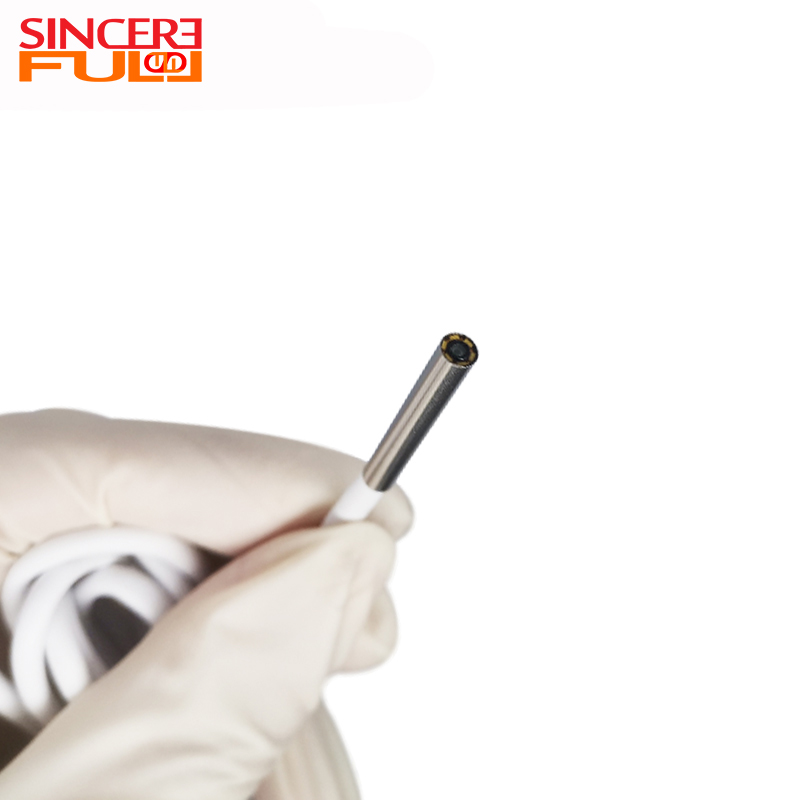
The 3.5mm diameter sits in a practical middle zone. It is small enough for compact probe designs, yet it leaves enough space for a CMOS image sensor, optical stack, protective housing, and illumination design. When the diameter becomes much smaller, every internal part becomes harder to align. The lens has less room, the sensor receives less light, and cable routing becomes more sensitive. When the diameter becomes larger, integration becomes easier, but the module may no longer fit the narrow pathway required by the final product.
A buyer should not treat diameter as a simple “smaller is always better” specification. A smaller camera head may reduce access limitations, but it may also affect brightness, field of view, heat control, and image noise. The correct choice depends on the real structure of the target system. For compact visualization products, the goal is not only to fit the space. The goal is to fit the space while still producing usable, stable images.
A reliable selection process should compare the module as a complete imaging assembly. Sensor resolution is only one item. The lens, cable, LED layout, circuit board, and connector also influence final performance. Engineers should review the following factors before confirming a sample.
Evaluation Item | Why It Matters | What to Confirm |
|---|---|---|
Outer diameter | Decides whether the module fits the probe path or housing. | Camera head size, tolerance, shell structure, and cable exit direction. |
CMOS sensor | Influences image resolution, low-light output, and frame stability. | Pixel count, frame rate, sensor format, and image signal processing. |
Lens and viewing angle | Controls how much of the target area appears on screen. | Field of view, distortion level, depth of field, and focus distance. |
Lighting structure | Improves visibility inside dark or enclosed spaces. | LED quantity, brightness control, heat behavior, and light uniformity. |
Interface | Determines host compatibility and development difficulty. | USB, Type-C, analog, MIPI, or other project-specific output options. |
Modern CMOS sensors make compact camera modules more practical than older imaging architectures. A CMOS sensor can combine efficient image capture with lower power use and a smaller circuit footprint. In a 3.5mm head, this efficiency is valuable because there is limited space for heat dissipation and cable design.
For the 3.5mm OV9734 CMOS endoscope camera module, the buyer should pay close attention to the balance between resolution, frame rate, field of view, and lighting. A wide-angle image helps users see more of the surrounding area, but too much distortion can reduce edge clarity. A higher frame rate supports smoother live viewing, but the host system must also process the signal without delay.
The lens is just as important as the sensor. If lens alignment is poor, a high-resolution sensor will still deliver soft images. If the focus range is wrong, the target may look blurred even when the module is working correctly. This is why sample testing should use the same working distance, lighting condition, and host display that the final product will use.
Before ordering a 3.5mm module, developers should define the physical and electrical environment. How much space is available for the camera head? How will the cable bend? Is the view direction straight ahead or side view? Does the product need LED lighting at the head, or will light come from another source? What host system will receive the image signal?
These questions prevent common mistakes. A module may look suitable on a specification sheet but fail to fit because the connector is too large or the cable is too stiff. Another module may fit mechanically but deliver poor images because its focus distance does not match the target. Good selection starts with application geometry, not only with image resolution.
Many endoscope camera module projects require adjustment rather than a simple catalog purchase. Diameter, cable length, connector type, light layout, shell material, viewing direction, and image output may need to be tuned around the host product. A good supplier should help confirm which parts are standard and which parts require engineering review.
The safer approach is to validate the module step by step. First confirm image output with a basic host board. Then test mechanical fit. After that, check lighting, focus, temperature behavior, and cable durability. Only after the module passes these checks should the design move toward pilot production.
For compact probe and narrow-space integration projects, developers can review the 3.5mm diameter OV9734 CMOS USB integrated endoscope camera module. It is a module-level imaging component that can be evaluated for projects requiring a small camera head, CMOS image output, and USB-based integration.
No. It is a compact imaging module. It normally needs a host system, power supply, enclosure, display, and software support before it becomes part of a finished product.
No. The right model depends on diameter tolerance, viewing direction, cable length, interface, focus range, lighting needs, and final housing design.
Buyers should test image clarity, focus distance, lighting uniformity, cable flexibility, connector fit, and compatibility with the intended host system.
A 3.5mm mini endoscope camera module is valuable because it combines compact structure with practical CMOS imaging capability. The correct selection process should define the module as a core component, not as finished equipment. Buyers should evaluate diameter, optics, lighting, interface, cable structure, and host compatibility together. With this approach, the module can support a stable and well-matched visualization product without creating confusion about its actual role.


